Inheriting a houseful of belongings is one of those experiences nobody prepares you for. You're grieving, you're overwhelmed, and suddenly you're standing in a living room full of decades' worth of possessions that need to be sorted, valued, and dealt with — often on a timeline you didn't choose.
This guide is here to help. Whether you've inherited a single box of jewelry or an entire estate, we'll walk you through the process step by step: what to do first, how to identify items that might be worth real money, how to get fair appraisals, and how to make thoughtful decisions about selling, keeping, or donating. We'll also cover the tax implications that catch many people off guard.
Take a breath. There's no rush to get everything right on day one. But there are some important steps you shouldn't skip — and some common mistakes that can cost you thousands of dollars.
First Steps After Inheriting Items
Before you sort, sell, or throw anything away, there are a few critical things to do in the first days and weeks after inheriting someone's belongings.
Secure the Property and Contents
If you've inherited an entire household, change the locks or ensure the property is secure. Unfortunately, estate theft — sometimes even by well-meaning family members — is more common than most people realize. Make sure only authorized individuals have access until everything has been properly documented.
Don't Clean Out Too Quickly
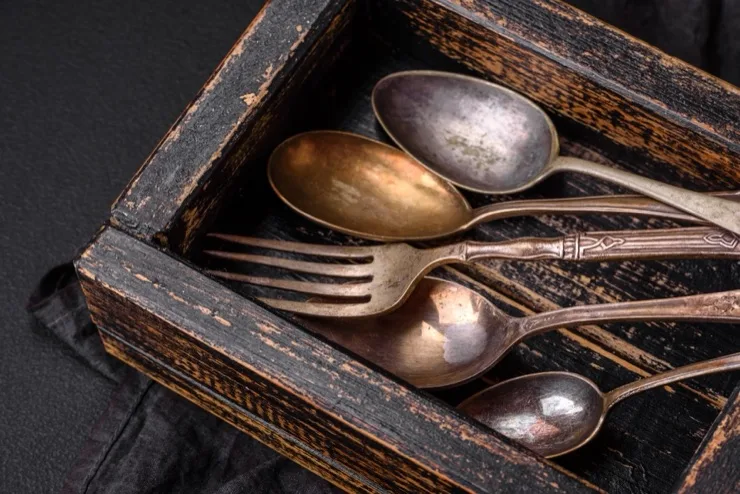
One of the most expensive mistakes people make is rushing to clear out a house. Items get thrown away, donated to charity shops, or sold at garage sale prices before anyone realizes their value. That dusty box in the attic could contain first-edition books. The "old silverware" in the kitchen drawer might be sterling silver worth thousands.
Never throw anything away or donate items in the first two weeks. Give yourself time to research and, ideally, get a professional walkthrough of the property before anything leaves the house.
Document Everything
Before moving anything, take photographs of every room and every collection. Open drawers, photograph closets, and capture the contents of boxes. This photographic record serves three purposes:
- It creates an inventory for insurance and estate purposes
- It helps appraisers assess items they can't see in person
- It protects you if disputes arise among family members later
Locate Important Documents
Search for purchase receipts, insurance policies, appraisal documents, certificates of authenticity, and any documentation related to valuable items. These can significantly increase an item's value and make the selling process smoother. Check filing cabinets, safes, desk drawers, and even between the pages of books — older generations often tucked important papers in unexpected places.
Understand the Legal Situation
Before distributing or selling anything, confirm the legal status of the estate. Is there a will? Has probate been filed? Are there co-heirs? In most jurisdictions, you cannot legally sell estate property until the estate has been settled through probate or the executor has granted authorization. Consult with the estate attorney if one exists, or seek legal advice if the situation is unclear.
How to Sort and Categorize What You've Inherited
Once the property is secure and documented, it's time to start sorting. This is where most people get stuck — everything feels overwhelming when you're looking at an entire household. The key is to work systematically, one room at a time.
Create Four Categories
As you go through items, sort everything into four groups:
- Potentially Valuable — Needs Research or Appraisal: Anything that might be worth significant money. When in doubt, put it here. Jewelry, watches, art, antiques, collections (coins, stamps, figurines), silver, china, vintage electronics, old tools, and anything that looks old and well-made.
- Sentimental — Keep for Family: Items with personal or emotional significance regardless of monetary value. Family photos, letters, handmade items, military service records, and heirlooms that tell your family's story.
- Functional — Distribute or Donate: Everyday household items in good condition that family members can use or that can be donated. Furniture, kitchenware, clothing, linens, and books (unless they appear to be first editions or collectible).
- Dispose: Items that are truly worn out, broken beyond repair, or have no functional or sentimental value. This pile should be the smallest — you can always move something here later, but you can't retrieve something you've already thrown away.
Items That Deserve a Closer Look
Certain categories of items are frequently undervalued during estate cleanouts. Pay extra attention to:
- Anything in the back of a closet or safe: Items that were stored carefully were probably stored for a reason.
- Collections of any kind: Coins, stamps, vinyl records, sports cards, figurines, vintage magazines, and even old tools can carry surprising value.
- Jewelry and watches: Even pieces that look like costume jewelry might contain real gemstones or precious metals.
- Art and framed prints: Original paintings, signed prints, and even some mass-produced art from certain eras can be valuable.
- Furniture with maker's marks: Check the undersides and backs of furniture for stamps, labels, or signatures that indicate a notable maker.
- Books with early publication dates: First editions, especially of well-known works, can be worth hundreds to thousands of dollars.
Related: Cleaning Out a Parent's House: 15 Everyday Items That Could Be Worth Serious Money
Common Inherited Items That Are Worth Money
Not everything that looks old is valuable, and not everything that looks ordinary is worthless. The table below covers the most common inherited items, their typical value ranges, and what to look for when assessing them.
| Item Category | Typical Value Range | What Increases Value | What to Look For |
|---|---|---|---|
| Gold & Silver Jewelry | $50 – $10,000+ | Karat weight, gemstone quality, designer signatures | Hallmarks (10K, 14K, 18K, 925), maker's marks, gemstone settings |
| Watches (Vintage/Luxury) | $200 – $50,000+ | Brand, condition, original box/papers, mechanical movement | Rolex, Omega, Patek Philippe, Cartier, Hamilton brands |
| Coin Collections | $100 – $25,000+ | Pre-1965 silver content, rare dates, mint errors, condition | Silver dollars, pre-1933 gold coins, proof sets, key dates |
| Sterling Silverware | $200 – $5,000+ | Complete sets, prominent makers (Tiffany, Georg Jensen), pattern rarity | "Sterling" or "925" marks, weight, pattern identification |
| Stamp Collections | $50 – $10,000+ | Pre-1940 stamps, rare errors, complete sets, condition | Inverted prints, first-day covers, unused condition, rare origins |
| Vintage Furniture | $100 – $15,000+ | Notable makers (Herman Miller, Knoll, Eames), Mid-century modern style | Maker's labels, quality construction, original finish, design era |
| Fine Art & Prints | $100 – $100,000+ | Known artist, original (not reproduction), provenance, condition | Signatures, gallery labels, authentication certificates |
| China & Porcelain | $50 – $5,000+ | Complete sets, notable makers (Meissen, Royal Copenhagen), age | Backstamps, hand-painted details, condition, pattern rarity |
| Vinyl Records | $5 – $5,000+ | First pressings, rare labels, original sleeves, condition | Label variants, matrix numbers, genre (jazz, blues, early rock) |
| Military Memorabilia | $50 – $10,000+ | WWII era, named/documented items, medals, rare units | Insignia, service records, photographs, medals with documentation |
Condition and completeness are the two biggest value multipliers across every category. A complete sterling silver set in its original case can be worth five to ten times more than individual pieces sold separately.
Related: How to Value Inherited Jewelry Without Getting Ripped Off
Related: Is Your Coin Collection Worth Anything? A Beginner's Guide to Coin Values
Getting Items Appraised: Options and Costs
Once you've identified items that might be valuable, the next step is getting them properly appraised. The type of appraisal you need depends on why you need it — selling, insurance, estate settlement, and tax donations each require different approaches.
Types of Appraisals
Fair Market Value (FMV) Appraisal: This determines what a willing buyer would pay a willing seller, with both having reasonable knowledge of the facts. This is the standard for estate settlements, tax reporting, and equitable distribution among heirs. Most estate situations require FMV appraisals.
Insurance (Replacement Value) Appraisal: This estimates what it would cost to replace an item with a comparable one at retail. Insurance values are typically 20-50% higher than fair market values. You need this if you plan to insure inherited items.
Liquidation Appraisal: This estimates what items would bring at a forced or quick sale — typically 30-60% of fair market value. Useful for understanding the floor price if you need to sell quickly.
Where to Get Appraisals
- Certified appraisers: Look for professionals certified by the American Society of Appraisers (ASA) or the International Society of Appraisers (ISA). These appraisals carry the most legal weight and are required for tax deductions over $5,000.
- Auction house estimates: Major auction houses like Christie's, Sotheby's, and Heritage Auctions offer free preliminary estimates for items they might be interested in selling. These aren't formal appraisals but can give you a market-based reality check.
- Specialty dealers: For specific categories (coins, stamps, jewelry, watches), reputable specialty dealers can often give quick verbal estimates. Be cautious — a dealer who wants to buy your item has an inherent conflict of interest.
- AI-powered valuation tools: Modern apps like Estimonia can give you a preliminary value range by analyzing photos of your items. This is a fast, low-cost way to triage which items deserve a professional appraisal.
What Appraisals Cost
Professional appraisal costs vary by type and complexity:
- Single-item appraisals: $50-$300 per item, depending on complexity
- Estate walkthroughs: $200-$500 per hour for an appraiser to visit a property and assess contents
- Full estate appraisals: $500-$5,000+ depending on the size and complexity of the estate
- Online/app-based estimates: Free to $20 per item
Never pay an appraiser a percentage of the appraised value — this creates a conflict of interest and violates professional appraisal standards. Always insist on a flat fee or hourly rate.
Related: Inherited Silverware: How to Tell If It's Sterling and What It's Worth

Selling, Keeping, or Donating: Making the Right Decision
This is often the hardest part of dealing with inherited items — and not just financially. Emotions run high, family dynamics can complicate things, and the "right" decision isn't always obvious. Here's a framework to help.
When to Keep Items
Consider keeping an item if:
- It has deep sentimental value that cannot be replaced
- It's appreciating in value and you can afford to hold onto it
- Multiple family members want it (in which case, consider a rotation or shared custody arrangement)
- You'll actually use, wear, or display it — not just store it in a box
Be honest with yourself about whether you're keeping something out of guilt or genuine attachment. Holding onto items you don't want or need creates a burden — both physical and emotional. Your loved one would likely prefer that you kept what brings you joy and passed the rest along to someone who would appreciate it.
When to Sell
Selling makes sense when:
- The item has significant monetary value but no sentimental value to any heir
- The estate has debts that need to be settled
- Multiple heirs need an equitable distribution and dividing items isn't practical
- You can't afford to store, insure, or maintain the item properly
Where to Sell Inherited Items
The best venue depends on what you're selling and how quickly you need to sell it:
- Auction houses: Best for high-value items ($1,000+). They handle marketing, authentication, and reach serious collectors. Commission is typically 15-25%.
- Online marketplaces (eBay, Etsy, Ruby Lane): Good for mid-range items. You control the price but handle shipping and customer service.
- Specialty dealers: Quick and easy for specific categories (jewelry, coins, watches). You'll typically get 50-70% of retail value.
- Estate sale companies: If you're liquidating an entire household, a professional estate sale company handles everything — pricing, setup, staffing, cleanup. They typically take 30-40% commission.
- Consignment shops: For mid-range antiques and collectibles. Lower commission than estate sales (typically 40-50% split) but items may take months to sell.
Related: How to Sell Inherited Gold and Silver Without Getting Lowballed
When to Donate
Donation is appropriate when:
- Items have modest monetary value but are in good, usable condition
- You want a tax deduction (for items valued over $250, you'll need a written acknowledgment from the charity; over $5,000 requires a qualified appraisal)
- The items would be meaningful to a specific organization — military memorabilia to a veterans' museum, books to a library, professional tools to a trade school
Managing Family Dynamics
Disputes over inherited items are one of the most common sources of family conflict. A few strategies that help:
- Use a round-robin selection process: Heirs take turns choosing items. Draw lots for the order. This feels fair because everyone gets equal access to choice.
- Get independent appraisals first: Knowing the actual value of items removes guesswork and reduces suspicion that someone is "getting the better deal."
- Hire a neutral third party: An estate mediator can help facilitate decisions when emotions run high. This costs a few hundred dollars but can save relationships.
- Document everything: Keep written records of who received what and the appraised value. This protects everyone and provides clarity if questions arise later.
Tax Implications of Inherited Valuables
Taxes on inherited items catch many people by surprise. The rules are more favorable than you might expect in some areas — and more complex in others. Here's what you need to know.
The Stepped-Up Basis Rule
This is the most important tax concept for inherited property. When you inherit an item, your tax basis (the value used to calculate capital gains) is "stepped up" to the item's fair market value at the date of the decedent's death — not what they originally paid for it.
For example: Your grandmother bought a painting for $500 in 1970. At the time of her death, it's worth $15,000. Your stepped-up basis is $15,000. If you sell it for $16,000, you only owe capital gains tax on the $1,000 gain — not on the $15,500 difference from the original purchase price.
The stepped-up basis rule means that if you sell inherited items relatively soon after the date of death (when the value hasn't changed much), you may owe little to no capital gains tax. This is why getting a date-of-death appraisal is so important.
Estate Tax vs. Inheritance Tax
The federal estate tax exemption for 2026 is over $13 million per individual. Unless the total estate exceeds this threshold, no federal estate tax is owed. However, six states (Iowa, Kentucky, Maryland, Nebraska, New Jersey, and Pennsylvania) impose a separate inheritance tax that applies to beneficiaries based on their relationship to the deceased and the value of what they receive.
If you're in one of these states, consult a local tax professional to understand your specific obligations.
Capital Gains When You Sell
When you sell inherited items, you'll owe capital gains tax on any appreciation above the stepped-up basis. The rate depends on your income and how long you've held the item:
- Long-term capital gains (held over 1 year): 0%, 15%, or 20% depending on your income bracket
- Collectibles (coins, stamps, art, antiques): Taxed at a special maximum rate of 28%, regardless of holding period — this is higher than the standard long-term capital gains rate
- Short-term capital gains (held under 1 year): Taxed as ordinary income
Tax Deductions for Donations
If you donate inherited items to a qualified 501(c)(3) charity, you can deduct the fair market value from your taxable income. Key requirements:
- Items valued under $250: Keep a receipt from the charity
- Items valued $250-$5,000: Get a written acknowledgment from the charity
- Items valued over $5,000: You must obtain a qualified appraisal from a certified appraiser and file IRS Form 8283
Record-Keeping Is Essential
Regardless of what you do with inherited items, keep thorough records:
- Date-of-death appraisals or fair market value documentation
- Receipts from any sales, including auction results
- Donation receipts and appraisals
- Records of any expenses related to the items (storage, restoration, appraisal costs — these may be deductible)
Related: Stamp Collection Value Guide: Is Your Inherited Collection Worth Anything?
Frequently Asked Questions
There's no universal deadline, but most estate professionals recommend waiting at least two to four weeks before making any major decisions. In the immediate aftermath, focus on securing the property and documenting contents with photographs. If there's a lease or mortgage deadline, prioritize identifying and securing the most valuable items first. The emotional pressure to "just get it done" is real, but rushing leads to costly mistakes — items sold at garage-sale prices or thrown away before their value is recognized.
For most items, self-research using online sold comparables and AI valuation tools is sufficient. However, you should hire a certified appraiser (ASA or ISA certified) in three situations: when items are potentially worth over $5,000, when you need an appraisal for tax purposes (especially charitable donations), or when the estate is being divided among heirs and an independent valuation prevents disputes. A professional appraisal is a legal document; your own research is not.
Selling to the first buyer who makes an offer. Whether it's a gold buyer, a coin dealer, or someone at a flea market, the first offer is almost always the lowest. Dealers who approach you proactively — "I'll take that off your hands" — are counting on your ignorance and urgency. Always get at least two to three independent opinions before selling anything of potential value, and research comparable sold prices online before walking into any negotiation.
Simply inheriting items is generally not a taxable event at the federal level (unless the total estate exceeds the estate tax exemption, currently over $13 million). However, when you sell inherited items, you may owe capital gains tax on any increase in value above the stepped-up basis (the fair market value at the date of death). Collectibles like coins, art, and antiques are taxed at a special maximum rate of 28%. Six states also impose a separate inheritance tax. Consult a tax professional for your specific situation.
Start with an independent appraisal of all significant items so everyone is working from the same set of facts. Then use a structured selection process — a round-robin draft where heirs take turns choosing items works well and feels fair. For items that multiple people want, consider either selling and splitting the proceeds, or having one heir "buy out" the others at the appraised value. If tensions are high, hiring an estate mediator ($200-$500 for a session) is far cheaper than the legal fees and family damage that result from unresolved disputes.
Final Thoughts
Dealing with inherited items is as much an emotional process as a practical one. The objects you're sorting through carry memories, history, and sometimes hidden financial value that their original owner may never have mentioned.
The most important thing you can do is slow down. Secure everything, document everything, and resist the pressure to make quick decisions. Get proper appraisals for anything that might be valuable. Understand your tax obligations. And when it's time to decide what to sell, keep, or donate, make those choices based on honest assessment rather than guilt or haste.
If you're feeling overwhelmed, start small. Pick one drawer, one box, one shelf. Take photographs, do a quick online search, and set aside anything that seems potentially valuable. The process gets easier once you build momentum — and once you realize that handling these items thoughtfully is one of the most respectful things you can do for the person who left them to you.