Every watch tells a story, but not every watch tells a story that translates into significant monetary value. Whether you've inherited a timepiece, found one at an estate sale, or simply want to know what the watch on your wrist is worth, understanding watch valuation is essential before you sell, insure, or invest.
This guide covers everything from the core factors that determine value to step-by-step methods you can use at home, brand-by-brand value tiers, and the most common mistakes that lead people to undervalue — or overpay for — watches.
What Determines a Watch's Value?
Watch valuation isn't a single number — it's the intersection of several factors that collectors, dealers, and auction houses weigh differently depending on the market. Here are the six pillars that determine what any watch is worth.
Brand and Manufacturer
Brand is the single largest driver of value in the watch market. A stainless steel Rolex Submariner from 1990 can be worth more than a solid gold watch from a lesser-known maker. The market assigns a premium to heritage brands with proven track records of holding value.
That said, not all watches from a premium brand are equally valuable. A quartz Omega from the 1990s is worth far less than a vintage Omega Speedmaster Professional. Within each brand, specific models, references, and production years carry their own premiums.
Condition and Completeness
Condition is the second most important factor. Dealers and collectors use standardized grading scales:
- Mint/New Old Stock (NOS): Unworn, with all original packaging, papers, and tags. Commands the highest premiums.
- Excellent: Light wear consistent with careful use. Crystal clear, movement running accurately.
- Good: Visible wear marks on case and bracelet. May need servicing. Still desirable for most collectors.
- Fair: Significant wear, scratches, or damage. Movement may need repair. Value drops substantially.
- Poor: Heavy damage, missing parts, or non-functional movement. Primarily valuable for parts or restoration projects.
A complete "box and papers" set (original box, warranty card, purchase receipt, instruction booklet) can add 10-30% to a watch's value, depending on the brand and rarity.
Rarity and Production Numbers
Watches produced in limited quantities — whether intentionally limited editions or models that were simply discontinued early — command higher prices. But rarity alone isn't enough. A rare watch from an unknown brand may still be worth very little. Rarity must combine with desirability.
Some watches become rare retroactively. The Rolex "Paul Newman" Daytona wasn't particularly popular when it was made (1960s-1980s), but scarcity plus the celebrity connection has driven prices into the hundreds of thousands — and occasionally millions.
Provenance and History
A watch with documented history — especially one owned by a notable person or associated with a significant event — can be worth multiples of its standard market value. Even without celebrity connections, a documented chain of ownership and service history adds confidence for buyers and increases value.
Movement Type and Complications
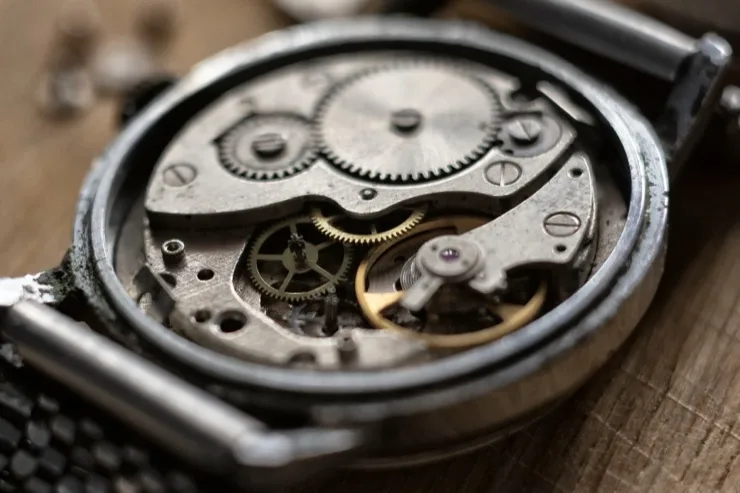
The movement (the mechanism inside the watch) matters significantly. In general:
- Mechanical hand-wound: Valued for craftsmanship and tradition. Vintage mechanical watches are highly collectible.
- Automatic (self-winding): The standard for modern luxury watches. Generally commands higher prices than quartz.
- Quartz: Battery-powered, highly accurate, but typically less valued by collectors. Notable exceptions exist (e.g., early quartz watches from the 1970s "Quartz Crisis" era).
Complications — additional functions beyond basic timekeeping — add value. Chronographs, moon phases, perpetual calendars, minute repeaters, and tourbillons each increase complexity, rarity, and price. A Patek Philippe with a minute repeater and perpetual calendar is worth exponentially more than a time-only model.
Market Trends and Demand
The watch market isn't static. Certain brands and styles go through cycles of popularity. Vintage dress watches from the 1950s and 1960s have surged in recent years. Sports watches (dive watches, chronographs) have been consistently strong for two decades. The market for independent watchmakers (F.P. Journe, MB&F, H. Moser) has grown dramatically.
Understanding where the market is heading matters if you're buying as an investment. If you're selling, timing can mean a 20-30% difference in price.
How to Check Your Watch's Value at Home
Before paying for a professional appraisal, you can get a reasonable estimate of your watch's value using these steps:
Step 1: Identify the Brand, Model, and Reference Number
Look at the dial for the brand name. Then check the caseback (some screw off, some snap off — don't force it) for a reference number, serial number, or model name. Many watches have the reference number engraved between the lugs (the parts where the strap attaches). You may need to remove the strap to see it.
Step 2: Document the Condition
Take clear, well-lit photographs from every angle: dial, caseback, sides of the case, crystal, bracelet/strap, and any engravings. Note whether the watch is running, the accuracy (if you can measure it), and any visible damage.
Step 3: Research Comparable Sales
Use these resources to find what similar watches have sold for:
- Chrono24: The largest online watch marketplace. Filter by brand, model, and condition to see current asking prices and completed sales.
- WatchCharts: Tracks market prices across multiple platforms. Shows historical price trends.
- Auction house archives: Christie's, Sotheby's, and Phillips publish results. These show actual hammer prices for authenticated watches.
- eBay sold listings: Filter for "sold items" to see actual transaction prices rather than asking prices.
Always look at sold prices, not asking prices. The gap between what sellers ask and what buyers actually pay can be 20-40%, especially for mid-range watches.
Step 4: Check for Red Flags
Before estimating value, verify authenticity. Common signs of a fake or "Frankenwatch" (assembled from parts of different watches) include:
- Dial text that's uneven, misspelled, or poorly printed
- A movement that doesn't match the brand (open the caseback if possible)
- Replacement hands, crowns, or bezels that don't match the original specification
- Serial numbers that don't correspond to the model's known production range
Related guide: How Much Is My Watch Worth? A Practical Guide
Luxury Watch Brands and Their Value Tiers
Not all luxury brands are created equal in terms of resale value. The market broadly organizes watch brands into value tiers based on their historical auction performance, brand prestige, and secondary market demand.
| Tier | Brands | Typical Resale Value | Notes |
|---|---|---|---|
| Holy Trinity | Patek Philippe, Audemars Piguet, Vacheron Constantin | 80-200%+ of retail | Consistently appreciate. Patek leads by a wide margin. |
| Tier 1 | Rolex, A. Lange & Söhne, F.P. Journe | 70-150%+ of retail | Rolex is the most liquid brand. Lange and Journe rising fast. |
| Tier 2 | Omega, Cartier, Jaeger-LeCoultre, IWC, Breitling | 40-70% of retail | Strong brands but significant retail-to-resale gap. |
| Tier 3 | TAG Heuer, Longines, Tudor, Grand Seiko | 30-55% of retail | Tudor and Grand Seiko gaining collector interest. |
| Tier 4 | Tissot, Hamilton, Seiko (standard), Citizen | 15-35% of retail | Reliable brands, but resale market is limited. |
These ranges are generalizations. Specific models within any brand can outperform or underperform their tier. A vintage Tudor Submariner "Snowflake" can outperform many Tier 1 watches. Conversely, a modern quartz Cartier Tank will lose value faster than a mechanical one.
Want to know which watches hold their value best? Read our guide: Best Luxury Watches That Hold or Increase in Value
Vintage vs Modern: What Holds Value Better?
This is one of the most common questions in watch collecting, and the answer is nuanced.
Vintage Watches (Pre-1990)
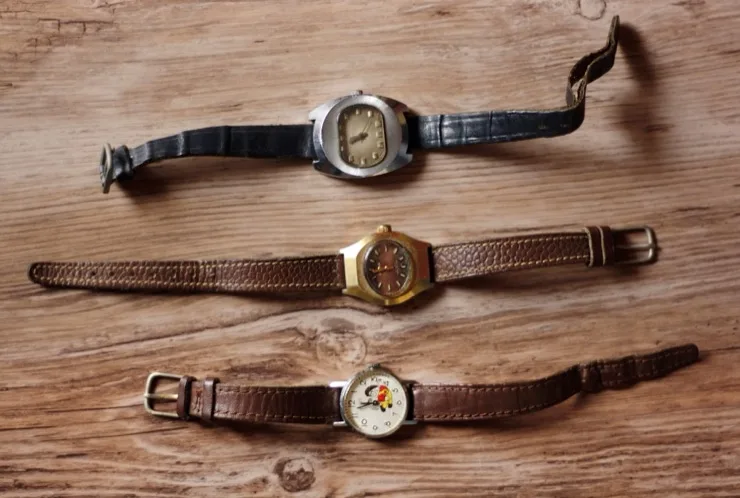
Vintage watches have finite supply — no more will ever be made. This creates natural scarcity, which drives value for desirable references. Vintage Rolex sport models (Submariners, GMT-Masters, Daytonas) have appreciated dramatically over the past 15 years. Vintage Omega Speedmasters, especially pre-moon references, have followed a similar trajectory.
However, vintage watches carry risks: harder to authenticate, potentially expensive to service (finding original parts can be difficult), and condition issues may not be immediately visible. The market also punishes "over-restored" vintage watches — a re-dialed face or polished case can cut value by 30-50%.
Modern Watches (Post-2000)
Modern watches benefit from better manufacturing standards, more robust movements, and manufacturer warranties. Most modern luxury watches depreciate upon purchase, but select models — particularly those with long waitlists (Rolex Daytona, Patek Philippe Nautilus, Audemars Piguet Royal Oak) — trade above retail on the secondary market.
For most modern watches, expect 20-40% depreciation in the first 2-3 years, stabilizing after that. The exceptions are the hyped models that become instant collectibles.
If you're buying a watch primarily as an investment, vintage models from established brands with documented provenance offer the most consistent long-term appreciation. If you're buying to wear and enjoy, a modern watch from a Tier 1-2 brand will hold value better than most other luxury purchases.
Explore vintage timepieces: Vintage Watch Value Guide: How to Tell If an Old Watch Is Worth Money
Common Watch Valuation Mistakes to Avoid
Whether you're buying, selling, or insuring a watch, these are the most frequent mistakes that cost people money:
1. Assuming Brand Alone Determines Value
A Rolex is valuable — but not every Rolex. A quartz Rolex Oysterquartz from the 1980s might be worth $3,000-$5,000, while a mechanical Daytona from the same era could be worth $30,000+. Model, reference, and condition matter as much as the name on the dial.
2. Polishing a Vintage Watch Before Selling
This is perhaps the costliest mistake in the vintage watch world. Professional collectors and dealers value original, unpolished cases. The sharp edges, factory finishing, and patina tell the watch's story. Heavy polishing removes metal, softens edges, and destroys originality. A well-preserved unpolished case can be worth 30-50% more than a polished one.
3. Losing the Box and Papers
For modern watches, the original box, warranty card, and papers can represent 10-25% of the watch's total value. For vintage watches, the premium for complete sets can be even higher — original box and papers for a vintage Rolex Daytona can add $5,000-$15,000 to the price.
4. Using Asking Prices as Market Value
There's often a significant gap between what sellers ask and what buyers pay. Always reference actual sold prices from auction results, dealer records, or marketplace completed sales.
5. Ignoring Service History
A watch that hasn't been serviced in 20 years may need $500-$2,000 in maintenance. For high-end complications, service costs can reach $5,000+. Factor this into your valuation — an unserviced watch should be priced accordingly.
6. Falling for "Limited Edition" Marketing
Not all limited editions are valuable. A "limited edition" of 5,000 pieces from a mid-range brand isn't truly scarce. Look at actual market demand, not just the production number. A widely available limited edition may be worth less than a standard model from a more desirable brand.
When to Get a Professional Appraisal
While home research can give you a ballpark figure, there are situations where professional appraisal is worth the investment (typically $50-$150 per watch):
- Insurance purposes: Insurance companies typically require a certified appraisal for high-value items. The appraised replacement value is usually higher than market value.
- Estate settlement: When dividing inherited watches among heirs, a professional appraisal provides a fair, documented value that all parties can rely on.
- Pre-sale preparation: If you're selling a watch worth $5,000+, a professional appraisal or authentication certificate can increase buyer confidence and justify your asking price.
- Authenticity concerns: If you suspect a watch might not be genuine, or if it's a high-value vintage piece, professional authentication is essential before buying or selling.
- Damage assessment: After a watch has been damaged (dropped, water-damaged, etc.), a professional can assess repair costs vs. current value to help you decide whether repair is worthwhile.
Look for appraisers certified by the American Society of Appraisers (ASA) or the National Association of Watch & Clock Collectors (NAWCC). For luxury watches, authorized service centers (Rolex, Omega, Patek Philippe) can provide authentication and condition reports.
Not sure if your watch is genuine? See: How to Spot a Fake Luxury Watch Before You Buy
Have a pocket watch? Check out: Old Pocket Watches: Value Guide
Final Thoughts
Watch valuation is part science and part art. The science is in the reference numbers, production figures, and comparable sales data. The art is in understanding the intangible factors — the story a watch tells, the emotional connection it creates, and the market's shifting tastes.
Whether you're looking at a $200 vintage Seiko or a $200,000 Patek Philippe, the same principles apply: brand, condition, rarity, provenance, and market demand. Master these five factors, and you'll be able to evaluate any watch with confidence.
For a quick estimate, try Estimonia — snap a photo of your watch and get an instant value range with confidence levels.
Frequently Asked Questions
Professional watch appraisals typically cost between $50 and $150 per watch. For high-value or complicated timepieces, specialized appraisers may charge $200-$300. Some jewelers offer free informal estimates, though these aren't suitable for insurance or legal purposes. Online appraisal services start around $25-$50 for a basic assessment based on photos.
The serial number alone won't tell you a watch's value, but it's a critical piece of the puzzle. Serial numbers help identify the exact production year, which matters for dating vintage watches. Combined with the reference number (model number), you can pinpoint the specific variant and look up comparable sales. For Rolex, serial numbers can be cross-referenced with known production databases to confirm authenticity and age.
Yes, though they're generally less collected than mechanical watches. Notable exceptions include early quartz watches from the 1970s "Quartz Crisis" era (like the Seiko Astron or early Omega Marine Chronometer), Grand Seiko quartz models with the 9F movement (known for extraordinary accuracy), and certain luxury quartz models from Cartier, Breitling, and Omega. High-accuracy quartz movements like the Bulova Precisionist also have a collector following.
Most manufacturers recommend servicing every 5-10 years for mechanical watches. A documented service history shows proper care and increases buyer confidence. However, for vintage watches, there's a nuance: servicing that replaces original parts (dial, hands, crown) with modern replacements can actually decrease value. The ideal is regular servicing that maintains the movement while preserving original external components.
Appraised value (also called replacement value) is typically what it would cost to replace the watch with an equivalent one at retail — it's usually 20-50% higher than market value and is used primarily for insurance. Market value is what the watch would actually sell for on the open market. For selling purposes, use fair market value. For insurance, use replacement value. Auction estimates typically fall between the two.