A US Mint 1893-S Morgan Dollar is typically worth $2,500 – $500,000, depending on reference, condition, originality, and provenance.
Market values current as of March 2026The King of Morgan Dollars: Why the 1893-S Stands Apart
In the entire series of Morgan Silver Dollars — struck from 1878 through 1904 and again in 1921 — no business-strike coin commands more respect, more scrutiny, or more money than the 1893-S. With a mintage of just 100,000 coins, it is the rarest Morgan Dollar produced for general circulation, and it has anchored the top of key-date lists for over a century. Whether you inherited one, discovered it in an old collection, or are simply researching what one might be worth, this guide gives you the complete picture: history, grading, current values, authentication, and market context.
The short version: an 1893-S Morgan Dollar in any grade, problem-free and certified by PCGS or NGC, is worth at minimum $2,500 — and potentially $500,000 or more in the finest known condition. The long version requires understanding exactly why this coin is so rare and what separates a $3,000 example from a $300,000 one.
If you want to understand the full Morgan Dollar series before focusing on this key date, start with our Morgan Silver Dollar Value Guide, which covers all dates and mints from 1878 to 1921.
History and Mintage: San Francisco, 1893
The Morgan Dollar was designed by George T. Morgan, an English-born engraver who joined the U.S. Mint in 1876. His initials — "M" — appear at the truncation of Liberty's neck on the obverse of every Morgan Dollar. The coin is composed of 90% silver and 10% copper, weighs 26.73 grams, and measures 38.1 mm in diameter. These specifications were established by the Bland-Allison Act of 1878, which mandated that the government purchase and coin large quantities of domestic silver.
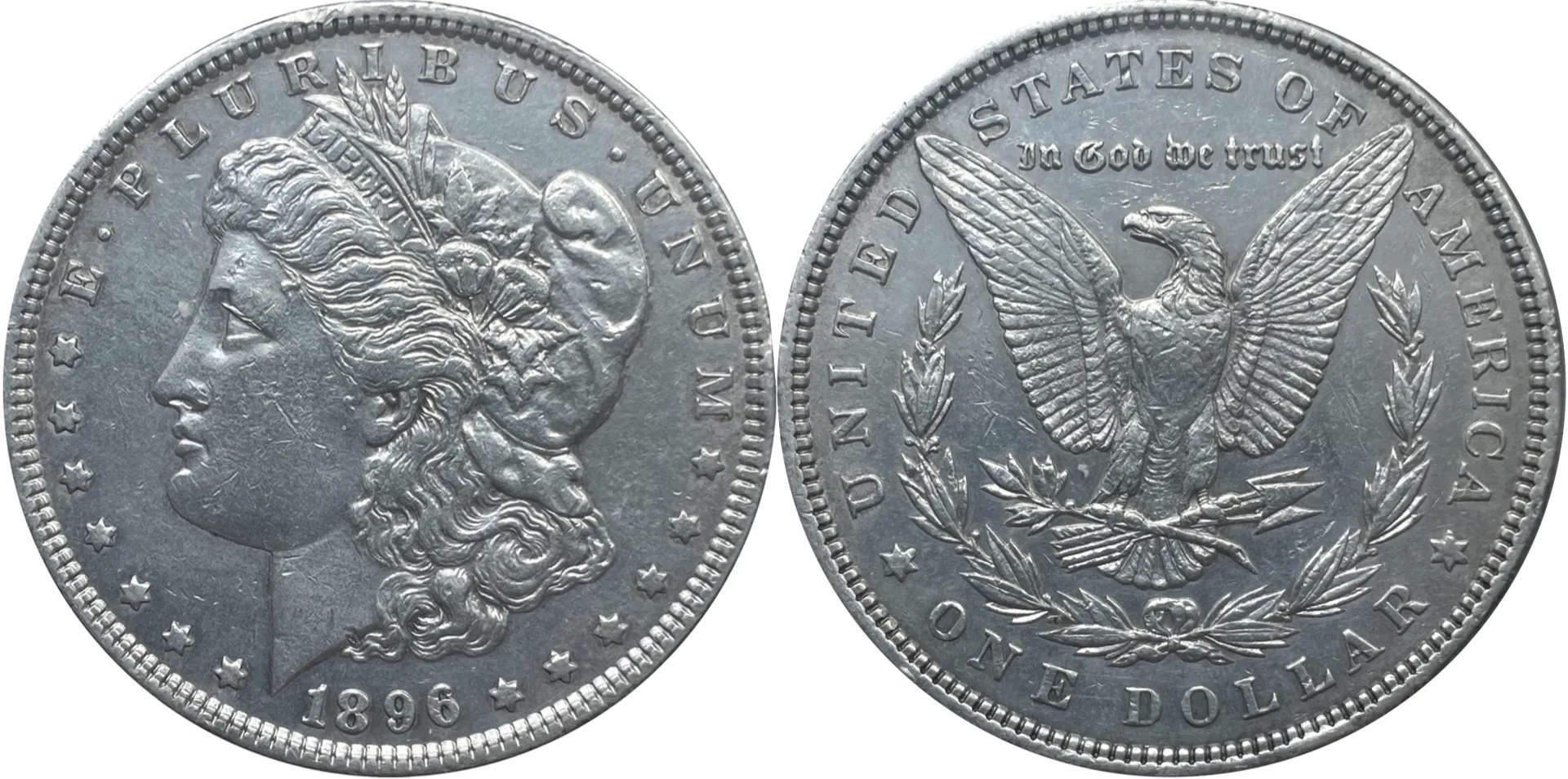
By 1893, however, the silver purchase program was under enormous political and economic pressure. The financial panic of 1893 gripped the country, silver prices were falling, and Congress was moving toward repealing the Sherman Silver Purchase Act. Mint production of silver dollars reflected this uncertainty. The San Francisco Mint, which had historically been one of the most prolific producers of Morgan Dollars, struck just 100,000 examples bearing the 1893 date — down from millions in prior years.
That figure of 100,000 is not simply low for a Morgan Dollar — it is catastrophically low. For context, the Philadelphia Mint struck 378,000 Morgans in 1893, and the New Orleans Mint struck 300,000. Even those mintages are considered scarce by Morgan Dollar standards. The 1893-S at 100,000 is in a different category entirely.
Most of those 100,000 coins entered circulation immediately and saw heavy use. Silver dollars of this era were workhorses — used in commerce, shipped to banks, and often subjected to rough handling in canvas bags. The economic turmoil of 1893 meant there was little impetus for anyone to set aside uncirculated examples as keepsakes. Most coins wore down to Good or Very Good grades before the hobby of coin collecting had developed enough for people to understand what they were holding.
Why the 1893-S Is So Rare Today
Low mintage alone does not guarantee rarity — some coins with small mintages were hoarded or saved in quantity. The 1893-S was not. Several factors compounded the scarcity:
No Treasury Hoards
In the 1960s, the U.S. Treasury released hundreds of millions of silver dollars from long-held government bags. Many common-date Morgans suddenly appeared in high mint-state grades by the bag load. The 1893-S was entirely absent from these releases. Unlike coins stored in Treasury vaults for decades, the 1893-S had been fully distributed into commerce and simply used up.
High Circulation Exposure
San Francisco was a major commercial hub in 1893. Its silver dollars circulated actively in local commerce and in trade with Asia. A coin that circulated in that environment for even a few years would reach Good or About Good grade quickly.
Small Surviving Population
PCGS and NGC combined have certified approximately 5,500–6,000 examples of the 1893-S across all grades. Of those, the vast majority grade AG-3 through VF-20. PCGS population data shows fewer than 150 examples graded Extremely Fine or better, fewer than 60 in About Uncirculated, and fewer than 30 in mint state across all MS grades. The number of MS-64 or finer examples is in the single digits.
Grading the 1893-S Morgan Dollar
Accurate grading is the single most important factor in valuing an 1893-S. The difference of a single grade point in the higher grades represents tens of thousands of dollars. Here is what to expect at each level of the Sheldon scale:
Poor (P-1) and Fair (F-2)
The coin is barely identifiable as an 1893-S — date and mintmark may be partially legible. Most detail is worn smooth. These grades exist primarily for type completeness.
About Good (AG-3)
The outline of Liberty and the eagle are visible but flat. Date and mintmark are legible but may be weak. This is the entry point for collectible 1893-S examples and already commands serious money.
Good (G-4) and Good Plus (G-6)
Design elements are clear but flat throughout. Liberty's hairline is visible as a smooth outline. The eagle's wings are outlined. Letters and date are fully readable. A "slider" grade — barely Good — can still be an attractive coin for budget-conscious collectors wanting to own this key date.
Very Good (VG-8 and VG-10)
Some design detail returns: Liberty's hair shows some separation near the top, and the eagle has some feather definition on the wings. The reverse legend is sharp. These are solid mid-circulated examples.
Fine (F-12 and F-15)
Moderate wear with major design elements clear. Liberty's hair above the ear shows distinct strands, and the eagle's breast feathers are partially visible. An 1893-S in Fine is a presentable, recognizable key date.
Very Fine (VF-20 through VF-35)
Light to moderate wear on high points. Liberty's hair and cheek show clear detail; the eagle's breast and wing feathers are mostly distinct. VF-20 is the most common grade in which dealers and auction houses advertise "circulated" key dates. An 1893-S at this level is impressive.
Extremely Fine (EF-40 and EF-45)
Light wear only on the very highest points — Liberty's cheek, hair above the ear, and the eagle's breast and wing tips. All design details are sharp and clear. Fewer than 100 problem-free examples are known at this level.
About Uncirculated (AU-50 through AU-58)
Slight wear on the highest surfaces with most mint luster remaining. AU-55 and AU-58 examples show nearly full luster with just a trace of rub. These coins bridge the gap to mint state and are among the most desirable for collectors who cannot afford full MS examples.
Mint State (MS-60 through MS-65+)
No wear whatsoever, but varying degrees of contact marks, luster quality, and strike sharpness. MS-60 to MS-62 coins are often heavily bagmarked and lackluster. MS-63 represents a significant quality jump and price jump. MS-64 and above are genuinely rare — perhaps 10–15 known in total across both major services. The finest known examples have been graded MS-65 by PCGS and represent the pinnacle of the series.
1893-S Morgan Dollar Value by Grade
| Grade | PCGS Grade Label | Approximate Value (2026) |
|---|---|---|
| AG-3 | About Good | $2,500 – $3,500 |
| G-4 | Good | $4,000 – $6,000 |
| VG-8 | Very Good | $7,000 – $10,000 |
| F-12 | Fine | $12,000 – $18,000 |
| VF-20 | Very Fine | $30,000 – $50,000 |
| EF-40 | Extremely Fine | $60,000 – $90,000 |
| AU-50 | About Uncirculated | $100,000 – $150,000 |
| MS-60 | Mint State | $175,000 – $225,000 |
| MS-63 | Mint State Choice | $300,000 – $400,000 |
| MS-65 | Gem Mint State | $500,000+ |
Wondering about yours?
Find out what your US Mint 1893-S Morgan Dollar is worth
Upload a photo and get an instant AI valuation with a realistic price range — free, and no account needed.
Note: Values are estimates based on recent auction results and dealer retail as of early 2026. Individual coins may sell above or below these ranges based on eye appeal, provenance, and market conditions. Always consult recent PCGS CoinFacts auction records and NGC Price Guide data for the most current figures.
Identifying the 1893-S: Mintmark and Die Varieties
Mintmark Location
The "S" mintmark is located on the reverse of the coin, above the letters "DO" in "DOLLAR," positioned between the eagle's tail feathers. This location is consistent across all San Francisco Morgan Dollars. The mintmark should appear as a clean, punched "S" with crisp edges. On genuine coins, the field immediately surrounding the mintmark is smooth and undisturbed.
VAM Varieties
Collectors who specialize in Morgan Dollar die varieties use the VAM (Van Allen-Mallis) reference system. The 1893-S has several documented VAMs:
- VAM-1: The normal die marriage, most commonly seen.
- VAM-2: Shows a slightly tilted "S" mintmark — a popular variety among specialists.
- VAM-3 and beyond: Various repunched date and mintmark varieties documented by VAM World researchers.
VAM varieties rarely command significant premiums over type coins for the 1893-S except at the highest grades, where a top-pop VAM example could be a once-in-a-generation auction event.
Authentication: Known Counterfeits and Red Flags
The 1893-S's enormous value makes it a prime target for counterfeiters and coin alterers. There are two primary types of fakes in the market:
Altered Mintmark Coins
The most prevalent fake is an authentic 1893-O (New Orleans) or 1893-P (Philadelphia) coin with the mintmark altered. An "O" can be partially filled and reshaped to resemble an "S." A Philadelphia coin (no mintmark) can have an "S" punch added. Under 10x magnification, these alterations reveal themselves through disturbed metal around the mintmark base, tool marks, or an "S" that sits unnaturally above the coin's surface level.
Outright Counterfeits
Some counterfeits are cast or struck from non-authentic dies. These often fail the weight test (26.73g), show incorrect reeding, or have dull, lifeless surfaces that lack the cartwheel luster of genuine mint-state coins. Cast fakes frequently show a grainy or porous surface texture under magnification.
The Only Safe Approach
Submit every potential 1893-S to PCGS or NGC before buying or selling. Both services have examined thousands of these coins and maintain comprehensive records of genuine die characteristics. Do not rely on dealer opinion alone for a coin at this price level.
Market Trends: How Has the 1893-S Performed?
The 1893-S has been one of the most consistent long-term performers in American numismatics. Key auction milestones illustrate its trajectory:
- In 2004, an MS-65 example sold for $414,000 — then a record for the series.
- Major Heritage Auctions sales in the 2010s established multiple six-figure benchmarks for AU and low-MS examples.
- By the early 2020s, circulated examples in Fine and Very Fine grades had roughly doubled in value compared to 2010 levels.
- The coin has held value through market downturns far better than most collectibles, driven by its absolute scarcity and blue-chip status among serious collectors.
You can track recent hammer prices directly through Heritage Auctions' Morgan Dollar archives.
The coin's market is thin — few examples trade hands in any given year — which means individual auction results can move the market. A single exceptional MS-64 coming to market can reset price expectations for the grade. This illiquidity is a feature for long-term holders (supply is permanently constrained) but a consideration for buyers who may need to sell within a short window.
Comparison with Other Morgan Dollar Key Dates
The 1893-S does not exist in isolation — it is part of a family of Morgan Dollar key dates that collectors frequently compare and contrast:
1889-CC (Carson City, 350,000 Mintage)
The 1889-CC is the rarest Carson City Morgan Dollar and a major key date. With 350,000 struck (3.5x the 1893-S mintage), it is considerably more available in circulated grades. A VF-20 1889-CC sells for approximately $10,000–$15,000 vs. $30,000–$50,000 for an 1893-S at the same grade. The 1889-CC has a strong following among CC-mint collectors, but the 1893-S is widely recognized as the tougher coin overall.
1893-O (New Orleans, 300,000 Mintage)
The same year, same era — but the New Orleans coin is three times more common. In circulated grades, the 1893-O sells for a fraction of the 1893-S, making it a popular "affordable" alternative for collectors building date sets. In mint state, both are genuinely rare, but the 1893-S commands a dramatic premium.
1895 Proof (Philadelphia, ~880 Proofs Only)
The 1895 Philadelphia Morgan is the most famous coin in the entire series: no business-strike examples are known to exist, only approximately 880 proof coins. In Proof-63 condition, an 1895 can sell for $60,000–$100,000 — surprisingly accessible compared to an 1893-S in high mint state. In Proof-65 or finer, the 1895 rivals or exceeds the finest 1893-S examples in price. The two coins appeal to different collector philosophies: the 1895 is the rarest by date, the 1893-S is the rarest by business strike.
Silver Melt Value: The Floor Price
Every Morgan Dollar contains 0.7734 troy ounces of pure silver. At current silver prices (approximately $30–$32/oz in early 2026), the intrinsic silver melt value of an 1893-S is roughly $23–$25. This is almost completely irrelevant to the coin's actual value — even the most worn, barely identifiable example sells for 100x its silver content. But melt value serves as an absolute theoretical floor and is worth knowing for insurance and estate purposes.
To calculate the exact silver melt value of any Morgan Dollar or other silver coin at today's spot price, use our free Silver Melt Calculator.
Where to Buy an 1893-S Morgan Dollar
Given the values involved, buying channel matters enormously:
Major Auction Houses
Heritage Auctions, Stack's Bowers, and Legends Numismatics handle the majority of significant 1893-S sales. Auctions provide transparent price discovery and access to provenance documentation. Buyer's premiums typically run 17–20% above the hammer price.
Established Coin Dealers
Dealers who specialize in rare U.S. coins — particularly members of the Professional Numismatists Guild (PNG) and the American Numismatic Association (ANA) — can source certified examples with warranties. Expect to pay retail premiums over auction, but you gain immediate availability and often a buyback guarantee.
Avoid Raw (Uncertified) Examples
No serious buyer should purchase an 1893-S without PCGS or NGC certification. The counterfeit risk is too high, and re-sale liquidity of raw examples is minimal. If you find a raw 1893-S at an estate sale or antique shop, do not pay key-date prices — have it authenticated first.
Frequently Asked Questions
How much is an 1893-S Morgan Silver Dollar worth?
Values depend heavily on grade. An 1893-S in AG-3 sells for approximately $2,500–$3,500, while circulated examples in VF-20 bring $30,000–$50,000. Mint-state examples are exceedingly rare: MS-63 coins can fetch $300,000–$400,000, and the finest known MS-65 examples have sold for over $500,000 at major auction houses.
Why is the 1893-S Morgan Dollar so rare?
The San Francisco Mint struck only 100,000 1893-S Morgan Dollars — the lowest mintage of any business-strike Morgan Silver Dollar. Most entered circulation immediately and were worn heavily. Survivors in problem-free circulated grades are scarce, and mint-state examples are among the rarest coins in all of American numismatics.
How do I identify an authentic 1893-S Morgan Dollar?
Look for the "S" mintmark on the reverse, positioned just above the "DO" of "DOLLAR" between the eagle's tail feathers. The date "1893" should appear on the obverse below Liberty's chin. Genuine coins weigh 26.73 grams and are composed of 90% silver and 10% copper. Counterfeit 1893-S coins exist — most are altered 1893-O or 1893-P coins with added or modified mintmarks. Professional third-party grading (PCGS or NGC) is essential.
Are there die varieties for the 1893-S Morgan Dollar?
Yes. VAM (Van Allen-Mallis) researchers have catalogued multiple die varieties for the 1893-S, including repunched dates and mintmark positions. The most notable is VAM-2, which shows a slightly tilted "S" mintmark. These varieties are collected by specialists but generally command modest premiums over type coins except in the highest grades.
Should I clean my 1893-S Morgan Dollar?
Never. Cleaning destroys natural surface luster and original patina, dramatically reducing value. A cleaned 1893-S that would otherwise grade VF-20 ($30,000+) may be labeled "Cleaned" by PCGS or NGC and sell for a fraction of that amount. If you believe you own an 1893-S, submit it to a professional grading service immediately — do not attempt any cleaning or conservation yourself.
Final Thoughts
The 1893-S Morgan Silver Dollar is not merely a valuable coin — it is one of the defining objects of American numismatic history. Its 100,000-coin mintage, struck during a year of economic panic at the San Francisco Mint, combined with near-total circulation of the surviving stock, produced a coin that remains genuinely difficult to obtain in any grade a century and a third later. For the serious collector, owning an 1893-S — even in AG-3 — is a meaningful achievement. For the investor or estate administrator, understanding its value requires respecting the grading scale: a single grade point can mean the difference between $3,000 and $300,000.
If you believe you have an 1893-S, the path is clear: do not clean it, do not sell it raw, and do not accept an offer without first obtaining a PCGS or NGC certification. The authentication cost is trivial relative to the potential value, and the certified holder is what the market demands. From there, major auction houses and established dealers provide the most transparent and competitive venues for selling — or for building the collection around — what is genuinely the king of Morgan Dollars.
How to Value a US Mint 1893-S Morgan Dollar: Step by Step
-
Locate and read the mintmark
Flip the coin to the reverse (eagle side). Look just above the letters "DO" in "DOLLAR," between the eagle's tail feathers. The mintmark should read "S" for San Francisco. An absent mintmark indicates Philadelphia; a "O" indicates New Orleans — neither is the key date.
-
Verify the date and weight
Confirm "1893" on the obverse below Liberty's portrait. Weigh the coin on a precise digital scale — authentic Morgan Dollars weigh 26.73 grams (±0.097g tolerance). A coin significantly under or over this weight is suspect.
-
Assess the overall grade
Examine Liberty's cheek, hair above the ear, and the eagle's breast feathers — these are the high-wear areas used to assign circulated grades. Use a 5x to 10x loupe under good lighting. Reference PCGS CoinFacts photo grades to calibrate your eye before estimating a grade.
-
Check for alterations and cleaning
Under magnification, examine the mintmark area for tool marks, filled lines, or unnatural texture that could indicate an added or altered mintmark. Check the fields (flat background areas) for fine parallel lines indicating wiping or cleaning. Natural toning should be uneven and gradual, not uniform.
-
Submit to PCGS or NGC for authentication
Given values starting at $2,500 even in the lowest grades, professional authentication is non-negotiable. Submit through PCGS.com or NGCcoin.com. Both services encapsulate the coin in a tamper-evident holder with the grade and certification number, which is required by most serious buyers and auction houses.
What Drives the Value
- Grade is the dominant value driver — the difference between AG-3 ($2,500) and MS-63 ($300,000+) is enormous; even a single grade point in mint state can mean tens of thousands of dollars.
- Surface preservation — cleaned, polished, or harshly treated coins are worth a fraction of problem-free examples; PCGS and NGC detail grades ("Cleaned," "Scratched") severely impact liquidity and price.
- Eye appeal — within a given grade, coins with original skin, attractive natural toning, and strong strike command significant premiums over average examples.
- Strike quality — the 1893-S is generally known for a below-average strike; sharply struck examples with full hair detail and fully defined eagle feathers are rare and command a substantial premium.
- Certification holder — PCGS-certified coins typically sell for premiums over NGC-certified examples for this date, largely due to the well-documented PCGS population report and collector preference.
- Provenance — coins with documented pedigrees from famous collections (e.g., Louis Eliasberg, Harry Bass, Wayne Miller) often achieve 10–25% premiums above comparable uncertified examples at major auctions.
Identification Checklist
- Mintmark location: "S" appears on the reverse above "DO" in DOLLAR, between the eagle's tail feathers — identical placement to all San Francisco Morgan Dollars.
- Designer's initial: George T. Morgan placed his "M" initial at the truncation of Liberty's neck on the obverse — a genuine coin will always show this mark.
- Reeding: authentic Morgan Dollars have 189 reeds on the edge. While difficult to count, edge reeding should be sharp, evenly spaced, and consistent around the entire circumference.
- Die characteristics: the 1893-S is known for several VAM varieties; VAM-2 shows a slightly tilted S mintmark. Familiarity with the known die marriages helps confirm authenticity over a convincingly altered coin.
- Known fakes: the most common counterfeit is an 1893-O or 1893-P with the mintmark removed and an "S" added, or an "O" altered to resemble an "S." Under magnification, genuine mintmarks show crisp, punched-in edges without surrounding disturbance to the coin's surface.
How to Spot a Fake
- Never buy an 1893-S Morgan Dollar without PCGS or NGC certification — raw (ungraded, unencapsulated) examples require expert in-person examination and carry significant counterfeit risk at this price level.
- The most common fake is an altered 1893-O: the "O" mintmark is filed down and an "S" punch is applied over it. Under 10x magnification, look for disturbance, tool marks, or unnatural metal flow around the base of the mintmark.
- A second common counterfeit is an 1893-P (Philadelphia, no mintmark) with an "S" added. The reverse field around the mintmark should be smooth and consistent with the surrounding metal — any raised ring, depression, or discoloration is a red flag.
- Verify the PCGS or NGC certification number on the holder at PCGS.com/cert or NGCcoin.com/certlookup before any purchase — counterfeit slabs exist, and a quick online lookup confirms the coin matches the described grade and date.
- Weight and specific gravity testing (using the Archimedes method) can help identify base-metal fakes, but cannot detect an authentic silver coin with an altered mintmark — which is why professional grading remains the only reliable authentication method.