This item is typically worth $25 – $500,000, depending on reference, condition, originality, and provenance.
Market values current as of March 2026America's Most Collected Coin
The Morgan Silver Dollar, designed by George T. Morgan and minted from 1878 to 1904 and again in 1921, is the most collected coin in American numismatics. Its large size (38.1mm), substantial silver content (0.7734 troy oz), and rich history — spanning the Wild West, the Gilded Age, and the rise of American industrial power — make it a tangible connection to a formative era in American history.
For collectors and inheritors alike, the key to understanding Morgan dollar values lies in three factors: date, mint mark, and grade. A common 1921 Philadelphia Morgan in worn condition might be worth $25-$30, while an 1893-S in uncirculated condition could fetch over $500,000. This guide helps you navigate that extraordinary range.
📖 Related: Collectibles Worth Money Guide — discover which collectibles beyond coins hold significant value.
Key Dates and Mint Marks: What to Look For
Not all Morgan dollars are created equal. The table below shows the most significant date/mint combinations with approximate values by grade:
| Date/Mint | Mintage | G-4 | VF-20 | MS-63 | MS-65 |
|---|---|---|---|---|---|
| 1893-S | 100,000 | $3,500 | $8,000 | $120,000 | $500,000+ |
| 1895 (Proof only) | 880 | — | — | $80,000 | $200,000+ |
| 1889-CC | 350,000 | $1,500 | $6,000 | $50,000 | $150,000+ |
| 1879-CC | 756,000 | $250 | $650 | $5,000 | $25,000 |
| 1884-S | 3,200,000 | $30 | $100 | $4,000 | $40,000 |
| 1878-CC | 2,212,000 | $100 | $200 | $800 | $5,000 |
| 1881-CC | 296,000 | $400 | $500 | $600 | $2,500 |
| 1885-CC | 228,000 | $500 | $600 | $700 | $3,000 |
| Common date (e.g., 1921) | 44,690,000 | $25 | $30 | $50 | $150 |
Wondering about yours?
Find out what your item is worth
Upload a photo and get an instant AI valuation with a realistic price range — free, and no account needed.
Carson City: The Premium Mint
Morgan dollars from the Carson City Mint (CC mint mark) carry consistent premiums regardless of date. The Carson City Mint operated from 1870 to 1893, processing silver from the Comstock Lode in Nevada. Its relatively low production numbers and association with the American frontier make CC Morgans the most sought-after by collectors. Even common CC dates command $100-$400 in average circulated grades.
A special category exists for GSA (General Services Administration) holders. In the 1970s, the US government sold surplus Morgan dollars — mostly CC dates — from Treasury vaults in specially designed hard plastic holders. GSA-holder coins with original packaging command premiums of 10-50% over raw coins of the same grade.
The Legendary 1893-S
With a mintage of just 100,000, the 1893-S is the undisputed "King of Morgans." It's the lowest-mintage circulation-strike Morgan and the most valuable regular-issue US silver dollar. Even in well-worn condition (G-4), an authentic 1893-S commands $3,500+. In gem uncirculated condition (MS-65+), it's a $500,000+ coin. This is also one of the most counterfeited coins — professional authentication is absolutely essential.
Understanding Coin Grading
The Sheldon grading scale runs from 1 to 70, and for Morgan dollars, every point matters at the higher end:
- AG-3 to G-4: Heavily worn, major features visible but flat. Most detail has been lost.
- VG-8 to F-12: Moderate wear, all major details visible. Letters and stars are sharp.
- VF-20 to VF-35: Light to moderate wear on high points. Hair detail above Liberty's ear is the key diagnostic.
- EF-40 to AU-58: Slight to minimal wear. Nearly full mint luster. AU-58 is "slider" — nearly uncirculated.
- MS-60 to MS-70: Uncirculated. No wear, only contact marks from handling. MS-65+ is "gem" quality.
For valuable coins (worth $200+), professional grading by PCGS or NGC is strongly recommended. These services authenticate the coin, assign an objective grade, and encapsulate it in a tamper-evident holder — all of which significantly increase the coin's liquidity and sale price.
Silver Melt Value vs. Numismatic Value
Every Morgan dollar contains 0.7734 troy ounces of .900 fine silver. At current silver prices ($25-30/oz), this gives a melt value of approximately $19-23. This is the absolute floor value — even the most common, heavily worn Morgan dollars trade above melt due to their historical significance and collector demand.
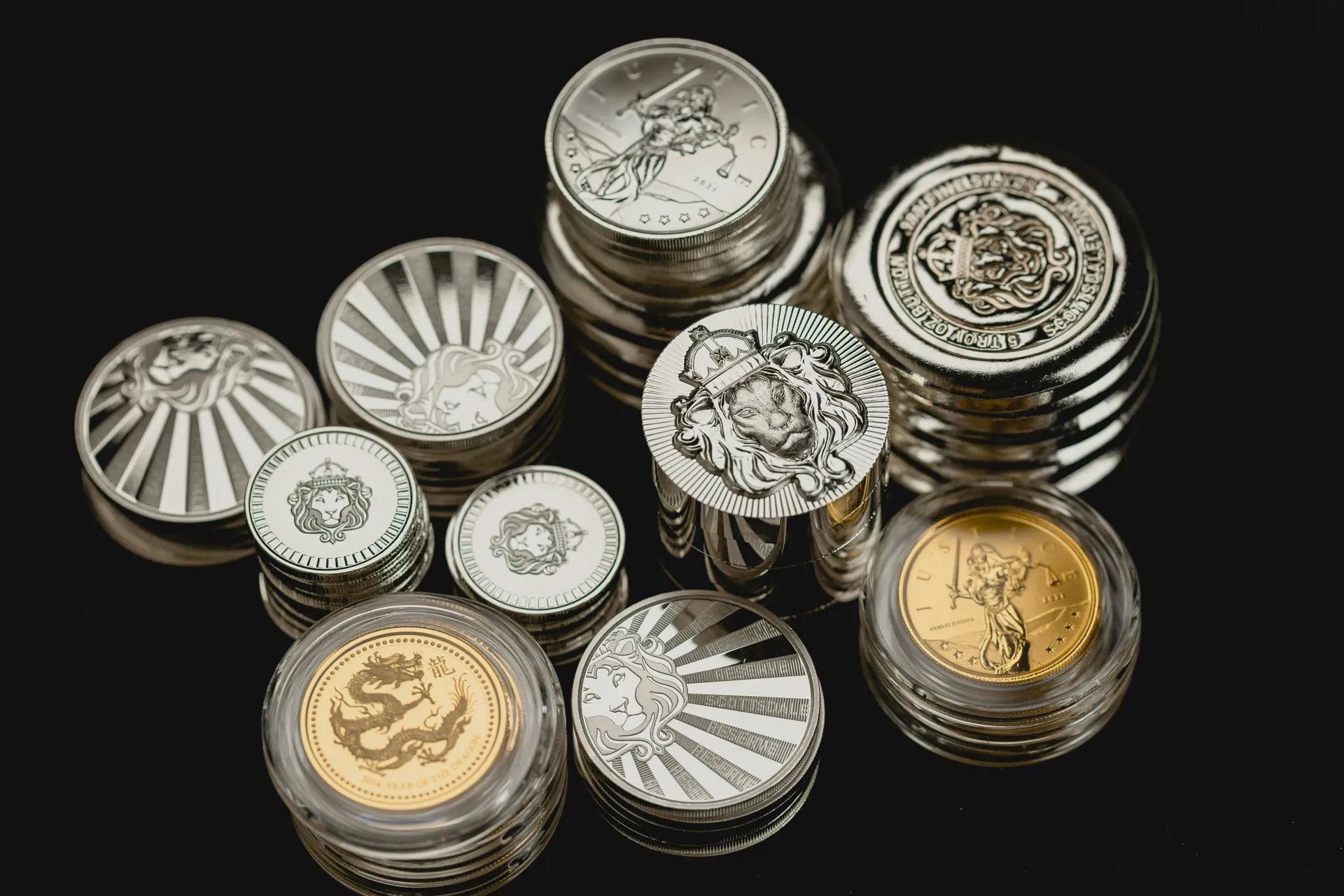
For common dates in average grades (VG to VF), the numismatic premium over melt is modest — roughly $5-20. For better dates, higher grades, or CC mint marks, the numismatic value can exceed melt by 10x to 25,000x.
📖 Related: Silver Melt Value Calculator — calculate the silver content value of your Morgan dollars instantly.
Authentication: Spotting Counterfeits
Morgan dollars are among the most counterfeited coins, especially key dates. Chinese-made counterfeits have become increasingly sophisticated, making authentication critical for any significant purchase.
Weight and Dimensions
A genuine Morgan dollar weighs 26.73 grams (±0.1g) with a diameter of 38.1mm. These measurements are your first line of defense. A precision scale ($15-30) is an essential tool for any coin collector. Counterfeits are often slightly off-weight due to different metal composition.
The "Ping" Test
Silver produces a distinctive high-pitched ring when struck or tapped. Balance the coin on your fingertip and tap it gently — a genuine silver dollar rings clearly for several seconds. Counterfeits in base metal produce a shorter, duller sound. While not definitive alone, this test is a quick screening tool.
Surface Characteristics
Under magnification, genuine struck coins show "flow lines" — parallel lines radiating from the center caused by metal flowing into the die during striking. Cast counterfeits show a porous, grainy surface texture entirely different from struck coins. This is one of the most reliable visual authentication methods.
📖 Related: Where & How to Sell Collectibles — find the best channels for selling valuable coins.
Market Trends: Morgan Dollars in 2026
- Common dates stable — circulated common dates trade at modest premiums above melt, providing affordable entry for new collectors.
- Key dates firm — 1893-S, 1889-CC, and Carson City dates continue to hold strong, with quality examples scarce at auction.
- Toned coins premium growing — attractively toned Morgans (rainbow, golden, electric blue) command increasing premiums as collector appreciation for eye appeal grows.
- GSA holders maintaining — government-packaged Carson City dollars retain their premium as a unique collecting category.
Heritage Auctions, the world's largest numismatic auction house, regularly features Morgan dollars in their weekly and signature auctions, providing excellent price transparency for the market.
Final Thoughts
The Morgan Silver Dollar offers something for every level of collector — from a $25 common date that connects you to the 19th century, to six-figure rarities that represent the pinnacle of American numismatics. Understanding dates, mint marks, and grading is the foundation of intelligent collecting and selling. When you hold a Morgan dollar, you're holding a piece of the American West, the silver mining boom, and the birth of modern American economic power — and that story is what makes these coins worth far more than their silver content alone.
How to Value This Item: Step by Step
-
Identify the Date and Mint Mark
The date is on the obverse (front). The mint mark is on the reverse (back) above "DO" in "DOLLAR." CC (Carson City) and S (San Francisco) are the key mint marks to look for.
-
Assess the Grade Visually
Use the Sheldon scale: AG-3 (barely readable), G-4 (major features visible), VG-8 (all letters sharp), F-12 (moderate detail), VF-20/30 (sharp detail), EF-40 (slight wear), AU-50/58 (minimal wear), MS-60+ (uncirculated).
-
Check for Key Date/Mint Combinations
Cross-reference date + mint mark against key date lists. Even well-worn examples of 1893-S, 1889-CC, or 1895 are valuable. A price guide (PCGS, NGC, Greysheet) will show values by grade.
-
Look for VAM Varieties
VAM (Van Allen-Mallis) varieties are die varieties with specific characteristics (doubled lettering, repunched dates, etc.) that can add significant value. Major varieties like the 1888-O "Hot Lips" and 1878 7TF Reverse of 79 are well-known.
-
Evaluate Eye Appeal
Beyond technical grade, "eye appeal" matters. Attractive toning (rainbow, golden, blue) can add 20-100%+ to value. Harsh cleaning, scratches, or dark spots reduce value below grade-typical pricing.
-
Consider Professional Grading
For coins potentially worth $200+, submit to PCGS or NGC. Certified coins sell for significantly more than "raw" (ungraded) coins due to authentication and grade certainty. Cost: $30-50 for standard grading.
-
Research Current Market Prices
Check PCGS Price Guide, NGC Census, Heritage Auctions sold results, and dealer inventories. The Morgan dollar market is well-documented with transparent pricing.
What Drives the Value
- Date and mint mark — the single most important factor; key dates command exponential premiums
- Grade — one point on the Sheldon scale can mean hundreds or thousands of dollars for scarce coins
- Eye appeal — attractive toning, original luster, and strike quality all affect value beyond technical grade
- Certification — PCGS or NGC grading adds authentication certainty and typically 10-30% to sale price
- Variety — recognized VAM die varieties can add significant premiums to otherwise common coins
- Originality — original, untouched surfaces are worth far more than cleaned or "dipped" coins
- Silver melt value — establishes the absolute floor; currently about $19-23 depending on silver prices
Identification Checklist
- Morgan dollars were minted 1878-1904 and again in 1921 — any date outside this range is not a Morgan
- The obverse shows Lady Liberty with a Phrygian cap and wreath; the reverse features an eagle with outstretched wings
- Weight should be approximately 26.73 grams and diameter 38.1mm — deviations suggest a counterfeit
- The reeded (ridged) edge should show 188-189 reeds — counterfeit coins often have incorrect reed counts
- Look for the designer initials "M" (George T. Morgan) at the truncation of Liberty's neck and at the base of the eagle's tail feathers
- The 1921 Morgan has a distinctly different appearance — different dies, slightly different relief — from earlier dates
- Carson City (CC) mint marks are small but distinct — sometimes confused with New Orleans (O) on worn coins
How to Spot a Fake
- Weigh the coin — genuine Morgan dollars weigh 26.73g (±0.1g); a coin significantly off-weight is likely counterfeit
- Check the edge reeding — genuine Morgans have 188-189 reeds; counterfeit reeding is often incorrect or uneven
- Examine under magnification — genuine coins show flow lines from the striking process; cast counterfeits show a grainy, porous surface
- The "ping test" — a genuine silver dollar produces a clear, high-pitched ring when balanced on a fingertip and tapped; counterfeits produce a dull thud
- Compare to known genuine examples — key areas for detecting counterfeits include the stars, lettering, and eagle's feather detail
- Be especially skeptical of "raw" (uncertified) key dates offered below market — 1893-S and Carson City coins are frequently counterfeited
- When in doubt, submit to PCGS or NGC for authentication — the grading fee is small insurance against purchasing a counterfeit