A Patek Philippe Calatrava is typically worth $10,000 – $150,000, depending on reference, condition, originality, and provenance.
Market values current as of March 2026Introduction: The Watch That Defined the Dress Category
In the world of haute horlogerie, few names carry the weight of the Patek Philippe Calatrava. Introduced in 1932, the Calatrava is not merely a watch — it is the watch against which all dress watches are measured. Its thin profile, clean dial, and impeccably hand-finished movement represent the purest expression of Geneva watchmaking philosophy. For collectors, it is the entry point into serious Patek Philippe ownership. For investors, it is one of the most consistently appreciating assets in the secondary watch market.
This guide covers everything you need to know about the Patek Philippe Calatrava: its history, key references, how to identify and authenticate one, what drives its value, and what you should expect to pay in today's market. Whether you are considering your first Calatrava purchase or looking to understand the value of one you have inherited, this is your complete reference.
History of the Calatrava: Born in Crisis, Built to Last
The Calatrava was born in 1932, at the depths of the Great Depression. Patek Philippe, facing financial difficulty, had been acquired the previous year by the Stern family — watchdial manufacturers who would steer the company back to stability. One of their first moves was to introduce a watch that would become the brand's cornerstone: reference 96.
Reference 96 was a direct expression of the Bauhaus design movement then sweeping Europe. The Bauhaus philosophy — form follows function, ornamentation is excess — translated perfectly into watchmaking. The ref 96 was round (at a time when other shapes were fashionable), thin, symmetrical, and devoid of unnecessary decoration. Its dial was legible. Its case proportions were balanced. It was, in short, timeless.
The name "Calatrava" was drawn from the brand's own emblem: the Calatrava cross, an eight-pointed heraldic cross associated with the 12th-century Spanish Order of Calatrava, a military and religious order known for its discipline and precision. Patek Philippe had adopted this symbol decades earlier, and naming their new flagship after it was a declaration of identity.
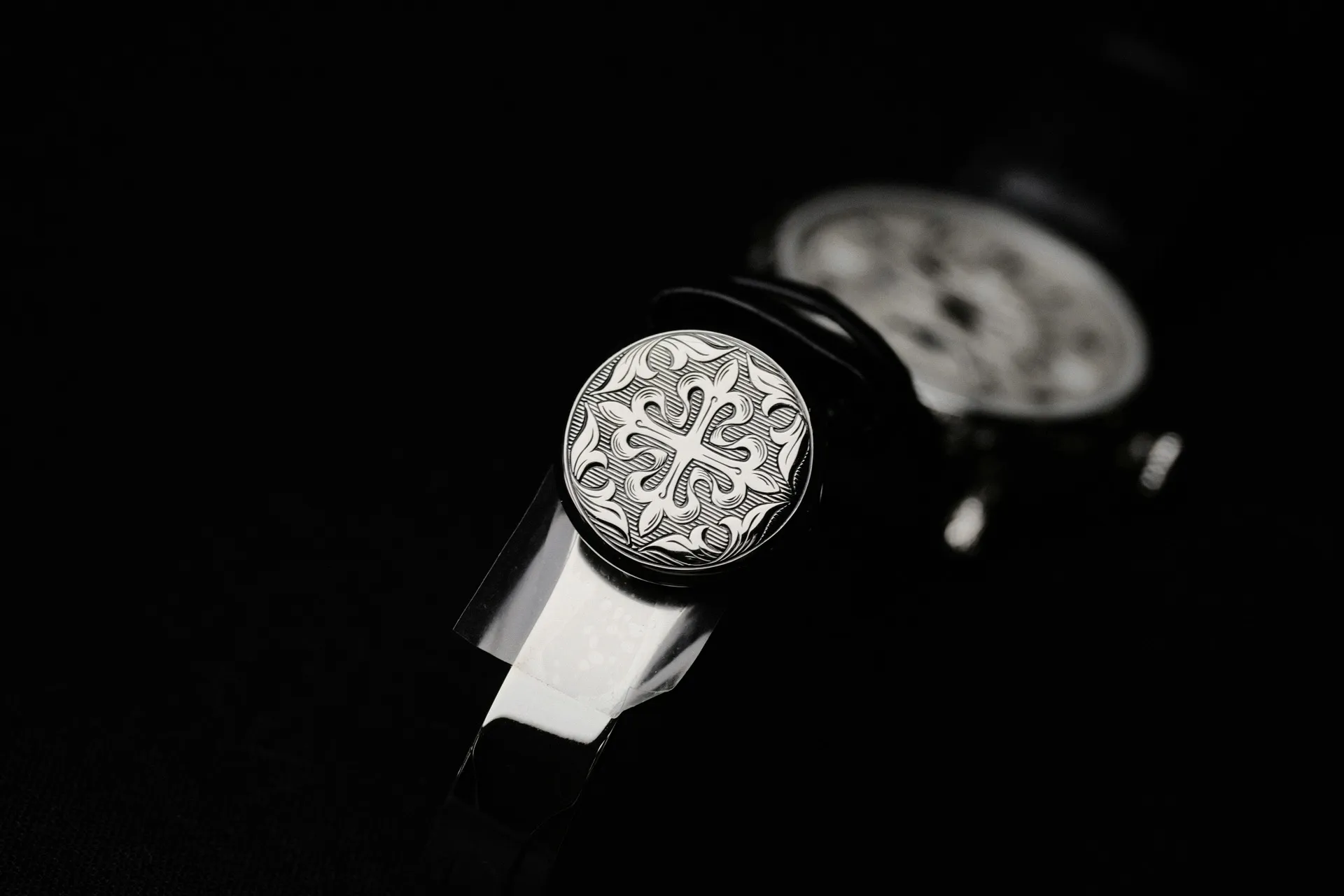
The Calatrava cross is engraved on the caseback of every Calatrava produced — a tradition maintained to this day across all references and metals.
Key References: A Collector's Roadmap
The Calatrava family spans nearly a century of production and dozens of references. Below are the most important ones for collectors and buyers.
Reference 96 (1932–present variations)
The original. Launched in 1932, the ref 96 established the Calatrava template: 31mm round case, hobnail bezel on early examples, subsidiary seconds at 6 o'clock, and a manual-wind movement. Vintage ref 96 examples with original dials and unpolished cases are among the most coveted vintage dress watches in existence. Post-war examples exist in various dial configurations, including sector dials and two-tone variants.
Reference 2526 (1953–1960)
The 2526 holds a special place in Patek history: it was the brand's first automatic wristwatch. It houses caliber 12-600 AT, featuring an 18-karat gold rotor. The dial, offered in enamel on early examples, is its most celebrated feature — true cloisonné enamel dials on the 2526 are exceptionally rare and valuable. A pristine 2526 with an original enamel dial regularly achieves six figures at auction.
Reference 3919 (1974–2001)
A direct descendant of the ref 96 spirit, the 3919 returned to manual winding and maintained the classic subsidiary seconds configuration. Available in yellow gold, white gold, and rose gold, it was produced for nearly three decades and represents an accessible entry point into vintage Calatrava collecting. Well-preserved examples with papers trade in the $15,000–$40,000 range.
Reference 5119 (2001–2016)
The 5119 modernized the classic Calatrava with a slightly larger 36mm case while retaining the manual-wind caliber 215 PS. Its clean silvered dial, applied gold indices, and Breguet hands make it immediately recognizable as a Calatrava. It was produced in yellow, white, and rose gold. Secondary market prices range from $18,000 to $35,000 depending on metal and condition.
Reference 5196 (2003–present)
Often called the purist's modern Calatrava, the 5196 uses the ultra-thin caliber 215 PS and measures 37mm — a size that flatters most wrists without feeling oversized. Its dial is offered in silvered, ivory, and black configurations. The 5196 is the reference most often recommended to first-time Calatrava buyers seeking a modern watch with classic DNA. Retail prices run approximately $26,000–$30,000; secondary market values are similar or slightly below retail.
Reference 5227 (2011–present)
The 5227 is the contemporary flagship Calatrava, housing the automatic caliber 324 SC in a 39mm case. Its most distinctive feature is the officer's caseback — a hinged solid gold cover that swings open to reveal the movement, a design historically used to protect pocket watch movements during transport. Available in yellow, rose, and white gold, the 5227 retails from approximately $38,000–$45,000.
Reference 6119 (2019–present)
The 6119 was introduced to mark the Calatrava's near-90-year legacy and features a new aesthetic direction with a more sculpted case and an opaline dial with a sunburst finish. It houses the automatic caliber 30-255 PS and is available in several metals including a distinctive copper-colored Calatrava that drew significant attention at launch. Retail prices begin around $31,000.
Design Philosophy: Minimalism as Mastery
What separates the Calatrava from other dress watches is not what it has — it is what it deliberately lacks. No date complication. No power reserve indicator. No elaborate guilloché across the entire dial. The Calatrava's restraint is a conscious design statement, and executing that restraint at the highest level of finishing requires exceptional skill.
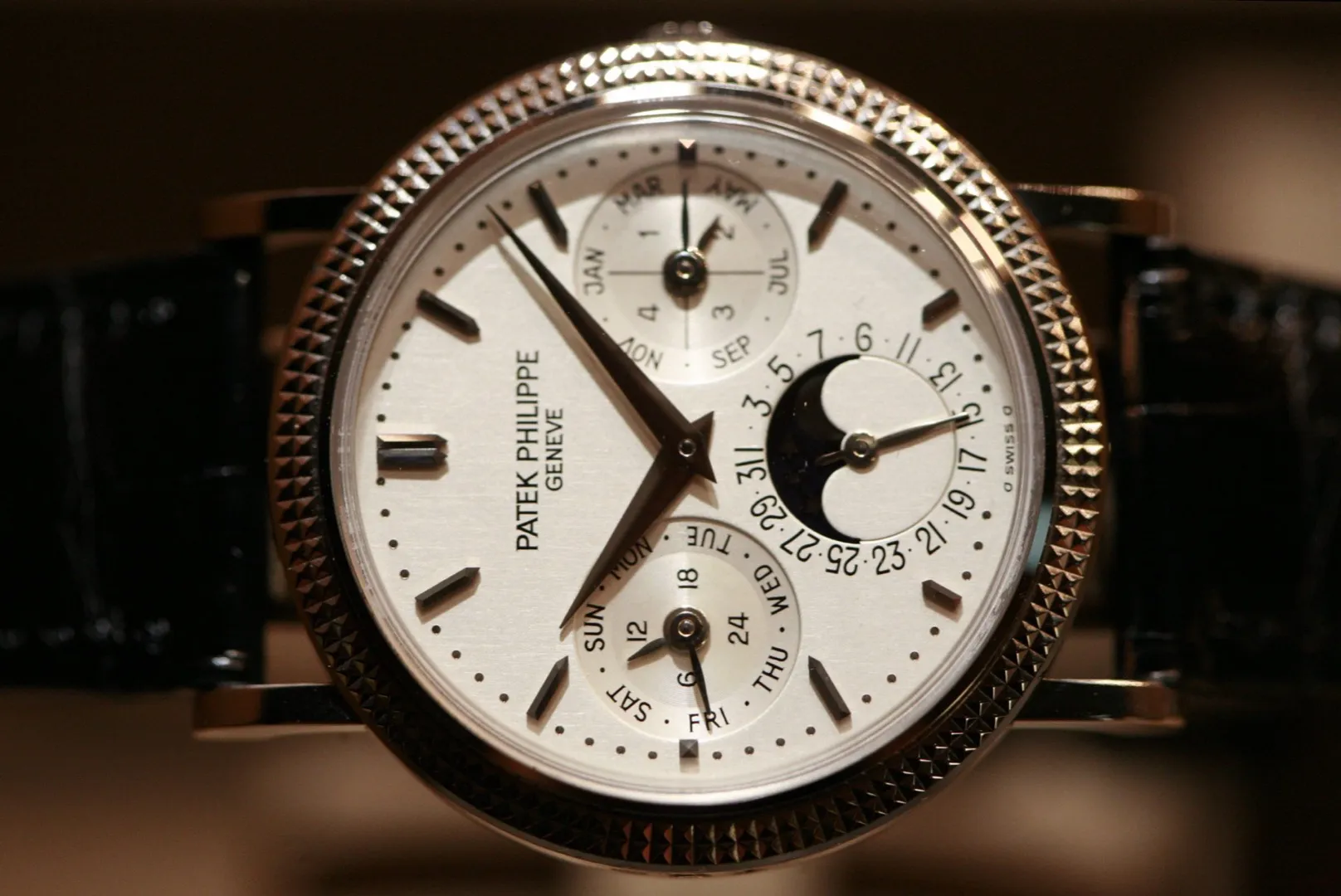
Every surface of a Calatrava case transitions between polished and brushed finishes according to Patek's specifications. The movement, even on references with a solid caseback, is decorated to exhibition standards: côtes de Genève (Geneva stripes), circular graining on the mainplate, hand-beveled and anglaged bridges, blued screws, and a Patek Philippe Seal medallion applied to the movement. This decoration exists even when no one will see it — a philosophy the manufacture has maintained for generations.
For an in-depth look at how Patek Philippe's sportier complications compare, see our Patek Philippe Nautilus Value Guide, which covers the reference 5711, 5726, and current 5726A in detail.
How to Identify a Calatrava
Authenticating a Calatrava requires attention across multiple points simultaneously. No single feature is definitive in isolation — authentication is the cumulative assessment of all elements together.
Caseback
Every Calatrava bears the engraved Calatrava cross on the caseback. On most references, this appears on a solid snap-back or screw-back case. On the 5227 and certain vintage references, the officer's caseback is hinged. The cross engraving should be crisp and deep, with sharp points — not soft, eroded, or inconsistently sized.
Dial
Dial authenticity is the most critical and most frequently compromised element in vintage Calatravas. Look for:
- Consistent spacing and alignment of applied indices
- No evidence of refinishing (loss of original texture, color inconsistency, or thick lacquer pooling at edges)
- Original Patek Philippe and Genève text in the correct typeface and weight
- Hands that match the reference specification (Breguet, baton, or leaf style as appropriate)
Movement
Open the caseback and confirm the caliber number matches the reference. The movement should bear the Patek Philippe Seal medallion, show côtes de Genève striping on bridges, and have blued screws throughout. Any evidence of aftermarket modification, missing parts, or incorrect caliber is disqualifying.
Value Factors
Six factors drive Calatrava pricing more than any others:
- Reference rarity — early references (96, 2526) and limited production dial variants command the highest premiums.
- Dial originality — a redone dial can reduce value by 30–50% versus an untouched original.
- Case condition — unpolished cases with sharp lug edges are significantly more valuable than over-polished examples.
- Completeness — original box, guarantee papers, and archive extract can add 20–40% to market value.
- Metal — platinum is rarest and most valuable; rose gold currently carries a market premium over yellow gold on modern references.
- Service history — Patek Philippe factory service, documented, is preferred over third-party service and supports value at resale.
Market Prices: Current Calatrava Values
The table below reflects secondary market trading ranges as of early 2026. Prices assume watches in very good to excellent condition. Pristine, unpolished examples with full sets command the upper end or above these ranges; worn or incomplete examples trade at the lower end.
| Reference | Era | Metal | Market Range (USD) | Notes |
|---|---|---|---|---|
| 96 (vintage) | 1932–1960s | Yellow Gold | $35,000 – $100,000+ | Hobnail bezel, sector dial variants highest |
| 2526 | 1953–1960 | Yellow Gold | $50,000 – $150,000+ | Enamel dial examples at extreme premium |
| 3919 | 1974–2001 | Yellow/White/Rose Gold | $15,000 – $40,000 | Rose gold commands premium |
| 5119 | 2001–2016 | Yellow/White/Rose Gold | $18,000 – $35,000 | White gold currently softest demand |
| 5196 | 2003–present | Yellow/White/Rose Gold | $20,000 – $32,000 | Near-retail secondary market |
| 5227 | 2011–present | Yellow/White/Rose Gold | $28,000 – $48,000 | Officer caseback, auto movement |
| 6119 | 2019–present | Multiple | $28,000 – $38,000 | Copper/rose gold variants draw most interest |
Wondering about yours?
Find out what your Patek Philippe Calatrava is worth
Upload a photo and get an instant AI valuation with a realistic price range — free, and no account needed.
Calatrava vs. Nautilus: Two Patek Philosophies
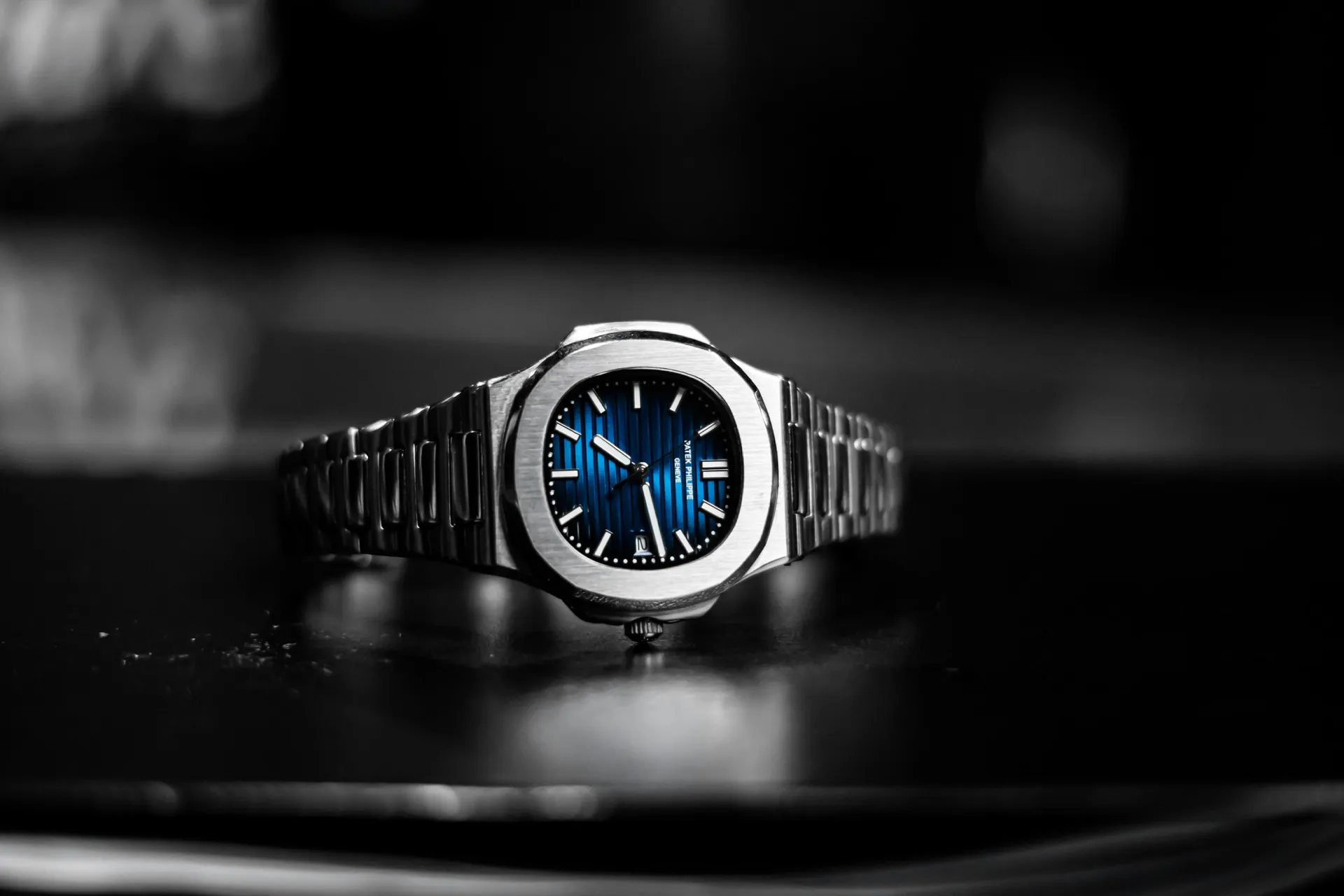
The Patek Philippe Nautilus, introduced in 1976, represents the brand's departure from pure dress watch tradition into the luxury sports category. Comparing the two illuminates different segments of the Patek market and different buyer motivations.
| Factor | Calatrava | Nautilus |
|---|---|---|
| Design language | Minimalist, round, Bauhaus | Integrated bracelet, porthole-inspired, bold |
| Water resistance | 30m (typical) | 120m |
| Market demand | Steady, collector-driven | Extremely high, speculative at times |
| Price volatility | Low to moderate | High (ref 5711 saw 3x retail at peak) |
| Entry price (secondary) | ~$10,000 (modern refs) | ~$40,000+ (ref 5711) |
| Wearability context | Formal, professional | Smart casual to formal |
If the Nautilus is your primary interest, our Patek Philippe Nautilus Value Guide provides a complete breakdown of the 5711, 5726, and Annual Calendar variants with current market prices.
Authentication: Protecting Your Investment
The Calatrava's prestige makes it a target for high-quality counterfeits. Modern replica production has advanced to the point where casual inspection will not suffice. The following practices protect buyers at any price level.
Buy from established sources. Major auction houses — Phillips Watches, Christie's, and Sotheby's — authenticate every lot before listing. Specialist dealers with long-standing reputations stake their business on accuracy. Private sales carry the highest risk and should always include a pre-purchase inspection by an independent qualified watchmaker.
Request an archive extract. Patek Philippe offers archive extracts for all watches they have produced. The extract confirms original reference, movement number, case material, dial configuration, and initial sale date. For any vintage Calatrava above $15,000, this document is non-negotiable. Learn more about Patek's archive services directly at patek.com.
Read trusted independent analysis. Hodinkee has published detailed reference guides and authentication articles on Patek Philippe that remain valuable resources for identifying correct dial configurations, movement calibers, and period-correct details across decades of production.
Market Trends: Where the Calatrava Stands in 2026
The Calatrava occupies a distinct position in today's watch market. Unlike the sports Patek segment — Nautilus and Aquanaut — which experienced extreme speculative price inflation between 2020 and 2023 followed by a correction, the Calatrava market has moved with more predictable, fundamentals-driven appreciation.
Several trends are shaping Calatrava values in 2026:
- Vintage premiums holding strong. Ref 96, 2526, and early 3919 examples in original, unpolished condition continue to find strong demand from serious collectors. The pool of pristine vintage Calatravas is finite and shrinking.
- Modern references trading near retail. The current production 5196, 5227, and 6119 trade close to retail on the secondary market — there is no significant premium, but they hold value better than most Swiss watches in their price segment.
- Rose gold demand. Across all references, rose gold variants currently carry the strongest buyer interest and the tightest bid-ask spreads on the secondary market.
- Completeness increasingly valued. As overall auction volumes have moderated from peak levels, buyer selectivity has increased. Complete sets — box, papers, archive extract, accessories — now command a more meaningful premium than they did in the frenzied 2021–2022 market.
FAQ
What is the most collectible Patek Philippe Calatrava reference?
The reference 96, introduced in 1932, is widely considered the most historically significant Calatrava. Vintage examples in original condition regularly sell for $50,000 to over $100,000 at auction. Among modern references, the 5196 and 5227 are highly sought after for their classical proportions and hand-finished movements.
How can I tell if a Patek Philippe Calatrava is authentic?
Authentic Calatravas feature the Calatrava cross engraved on the caseback, crisp serif text on the dial with no spelling errors, perfectly centered and evenly spaced indices, and a movement bearing the Patek Philippe Seal. The crown should engage crisply, and all screws should show hand-beveled edges under magnification. Always request an extract from the Patek Philippe archives when buying vintage.
What does a Patek Philippe Calatrava sell for today?
Current retail prices for new Calatrava models range from approximately $25,000 to $55,000 depending on the reference and metal. On the secondary market, well-preserved vintage examples can exceed $80,000 to $150,000, while entry-level modern references trade between $10,000 and $30,000.
What is the Calatrava cross and why does it appear on Patek Philippe watches?
The Calatrava cross is an eight-pointed heraldic cross associated with the 12th-century Spanish Order of Calatrava. Patek Philippe adopted it as the brand's emblem and named the watch collection after it. The cross appears engraved on the caseback of every Calatrava produced.
Is a Patek Philippe Calatrava a good investment?
Historically, Calatrava watches — especially vintage references in original condition with box and papers — have appreciated steadily. They are less volatile than sports models like the Nautilus, but their rarity, craftsmanship, and brand prestige make them reliable long-term holds. Condition, completeness, and reference rarity are the primary value drivers.
How to Value a Patek Philippe Calatrava: Step by Step
-
Identify the Reference Number
Locate the reference number on the caseback or, on older pieces, engraved between the lugs. Cross-reference it against known Calatrava references (96, 2526, 3919, 5119, 5196, 5227, 6119) to establish the model's production era, movement type, and original retail price.
-
Assess the Dial Condition
Examine the dial under strong, angled light for hairline cracks, refinishing (look for loss of original printing texture), moisture damage, or replaced hands. Original patina on vintage dials adds value; a redone dial significantly reduces it. Use a 10x loupe for close inspection.
-
Inspect the Case and Lugs
Check lug thickness — over-polishing removes metal and rounds the sharp edges that Patek specifies. Original cases show crisp lug edges and a mix of brushed and polished surfaces as designed. Measure case diameter if possible; shrinkage from polishing is a red flag on vintage pieces.
-
Verify the Movement
Open the caseback (officer's caseback on some references folds open; others require a case wrench) and examine the movement. Look for the Patek Philippe Seal (gold-colored medallion), hand-beveled bridges, Geneva stripes (côtes de Genève), and blued screws. The movement serial number should align with production records.
-
Request an Archive Extract
For any vintage Calatrava purchase above $10,000, request an official Extract from the Patek Philippe archives. This document confirms the original reference, movement caliber, case material, dial configuration, and date of sale — providing critical provenance and materially supporting resale value.
What Drives the Value
- Reference rarity — early references (96, 2526) and limited production variants command the highest premiums due to scarcity and historical importance.
- Dial originality — untouched original dials with honest patina are far more valuable than refinished or replaced dials; a redone dial can reduce value by 30–50%.
- Case condition — sharp, unpolished lug edges and factory-correct surface finishing retain maximum value; over-polished cases lose both metal and collector appeal.
- Box and papers — a complete set with original Patek Philippe box, guarantee certificate, and archive extract can add 20–40% to market value versus a watch-only example.
- Metal — yellow gold, rose gold, and platinum examples each carry different market premiums; platinum Calatravas are the rarest and most valuable in any reference.
- Service history — movements serviced by Patek Philippe's own service center (with accompanying documentation) are preferred over third-party services, as Patek uses proprietary parts and maintains the Seal standards.
Identification Checklist
- The Calatrava cross (eight-pointed heraldic cross) is engraved on the caseback of every authentic example — its absence is an immediate red flag.
- Reference 96 pieces made before 1950 typically feature hobnail (clou de Paris) bezels and small, recessed subsidiary seconds dials at 6 o'clock — a hallmark of the original Bauhaus-influenced design.
- The officer's caseback — a hinged solid gold cover that opens to reveal the movement — appears on select references such as the 5227 and certain vintage models; it is a high-end finishing detail unique to Patek.
- Dial text on authentic pieces is applied with precise, consistent weight; the word "GENEVE" or "SWISS MADE" appears at the bottom in a specific typeface that counterfeiters frequently render incorrectly.
- Movement calibers are model-specific: reference 5196 uses caliber 215 PS (manual wind), reference 5227 uses caliber 324 SC (automatic). A mismatched caliber indicates a frankenwatch or service error.
How to Spot a Fake
- Request a Patek Philippe archive extract for any vintage purchase — it is the single most reliable provenance document and confirms original configuration.
- Examine crown and pusher engraving under magnification: the Calatrava cross on the crown should be sharply defined with clean points, not soft or blurry as seen on replicas.
- Verify serial number consistency: the case serial and movement serial should both fall within the documented production range for the stated reference year — cross-check with published Patek serial number tables.
- Under UV light, original vintage lacquer dials often fluoresce differently than modern reproductions; this is a supplemental check, not definitive, but useful alongside other authentication methods.
- Have the movement inspected by a certified watchmaker or submit to a specialist auction house (Phillips, Christie's, Sotheby's) for pre-sale authentication — their specialists examine hundreds of Patek pieces annually and will identify inconsistencies that generalist appraisers may miss.