This item is typically worth $5 – $3,250, depending on reference, condition, originality, and provenance.
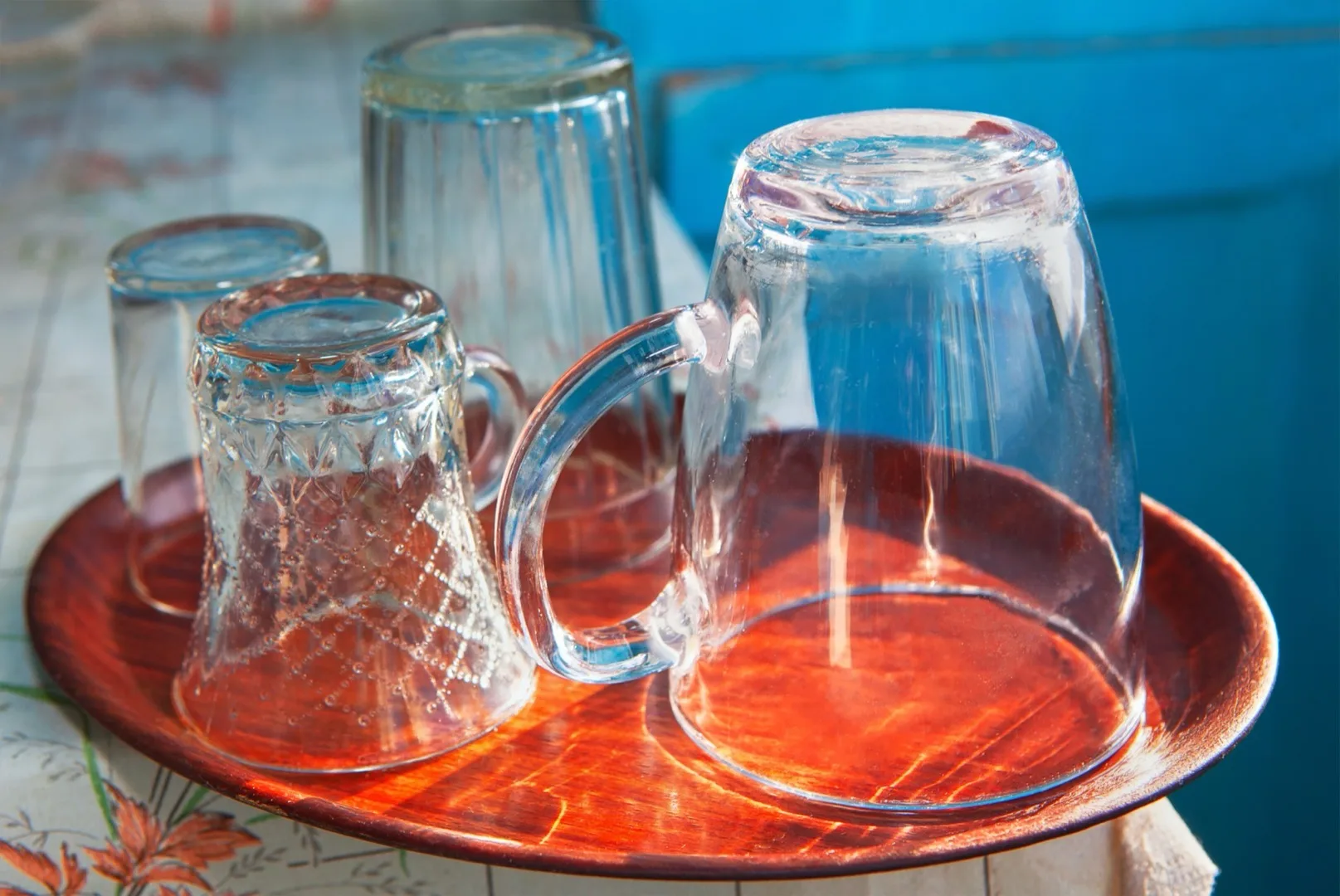
Market values current as of July 2026Depression glass is inexpensive, mold-pressed colored glassware mass-produced in the United States roughly from 1929 through the early 1940s by companies such as Hocking, Jeannette, Federal, and Hazel-Atlas. Churned out cheaply during the Great Depression, it was often given away free as a promotional incentive inside boxes of oatmeal or flour, at movie theaters, and at gas stations. Genuine pieces are typically thin and lightweight, carry faint vertical mold seams, and show small bubbles — produced in a rainbow of transparent colors, most famously pink and green, along with the scarcer cobalt blue and ruby red.
The value spread is enormous because the same pattern could be sold as a common dime-store plate or as a rare specialty form made in tiny quantities. Ordinary plates, cups, and tumblers in common colors often trade for just a few dollars, while genuinely scarce forms and colors — a cobalt Royal Lace butter dish, a pink Mayfair cookie jar, or a footed Mayfair tumbler — can command hundreds to a few thousand dollars.
Most common Depression glass pieces sell for roughly $5 to $35 each, but rare patterns, scarce colors (especially cobalt blue and ruby), and hard-to-find forms like cookie jars, pitchers, and butter dishes can bring $200 to over $3,000.
Most valuable Depression glass patterns
Figures below are drawn from collector guides and auction data and reflect strong-condition examples; actual prices vary with condition and completeness.
| Item | Typical value | Notes |
|---|---|---|
| Mayfair (Open Rose), pink — rare forms | $200–$3,250 | Hocking's most sought-after pattern; a footed casserole bowl sold for $3,250 in 2022 (verified). Cookie jars $200–$300. |
| Royal Lace, cobalt blue (Ritz Blue) | $200–$700 | A "holy grail" color; a cobalt covered butter dish sold for $689 in 2023 (verified). |
| Cameo (Ballerina), pink & yellow | $100–$500+ | Green Cameo is common; pink and yellow were limited runs and reach the hundreds. |
| Cherry Blossom, child's / rare pieces | $400–$800+ | Jeannette pattern; the child's butter dish is a prized rarity. Heavily reproduced — authenticate. |
| American Sweetheart, ruby/cobalt & lamp shades | $400–$700 | Macbeth-Evans; ruby red is rarest, cobalt second; lamp shades bring the most. |
| Mayfair, blue — footed tumblers | $600–$750 | A set of six blue Mayfair footed tumblers in pristine condition sold for just under $720 (verified). |
| Moderntone, cobalt blue | $20–$500+ | Hazel-Atlas; cobalt is the premium color and among the most prized in the category. |
Wondering about yours?
Find out what your item is worth
Upload a photo and get an instant AI valuation with a realistic price range — free, and no account needed.
What it actually sells for
Value is driven far more by pattern rarity, color, and form than by age alone, since nearly all of it dates to the same short window. Color is the single biggest multiplier: cobalt blue is the rarest and most valuable, followed by ruby red, while pink is the most popular of the common colors and green and amber the least valuable. Within any pattern, specialty forms carry the money — pitchers, cookie jars, covered butter dishes, footed tumblers, and complete matched sets vastly outperform loose plates. Condition is decisive: chips, cracks, cloudy "sick glass," and heavy scratching can erase most of a piece's value.
The market is bifurcated and, overall, softening. Common lower-tier pieces have trended down and now trade well below their early-2000s peaks, pressured by an aging collector base. At the same time, premium patterns and scarce colors — pink Cameo, green and pink Mayfair, cobalt Royal Lace — have held firm, with recent sold comps sometimes exceeding older guide-book ranges.
Notable and record results include:
- Pink Mayfair (Open Rose) footed casserole bowl, excellent condition — $3,250 (Reported 2022 sale (LoveToKnow / Yahoo Lifestyle))
- Cobalt blue Royal Lace covered butter dish — $689 (Reported 2023 sale (LoveToKnow))
- Set of six blue Mayfair footed tumblers, pristine — just under $720 (LoveToKnow / KnowOldStuff)
Where and how to sell Depression glass
Rare patterns and scarce-color pieces do best with specialist glass dealers, Depression glass societies, or Replacements.com; common pieces sell on eBay, Etsy, and Ruby Lane. Check completed listings for realistic pricing and compare auction house fees for higher-value lots. Not sure what you have? Get a free AI valuation from a photo, or see our vintage Pyrex value guide.
Trusted resources
- National Depression Glass Association — 92 Major Glass Patterns
- Replacements, Ltd. — Depression Glass patterns & identification
- LoveToKnow — Rare & Valuable Depression Glass Patterns
- Invaluable — Depression Glass: A Beginner's Guide
- 20th Century Glass — Depression Glass Identification Guide
What Drives the Value
- Color rarity — cobalt blue and ruby red command the highest premiums; pink is popular, green and amber least valuable
- Pattern desirability — Mayfair, Cameo, Royal Lace, American Sweetheart outperform generic patterns
- Form/scarcity — pitchers, cookie jars, covered butter dishes and footed tumblers far exceed loose plates
- Condition — chips, cracks, cloudy "sick" glass and heavy scratching sharply reduce value
- Completeness — full matched dinner sets and lidded pieces with original lids bring more
- Reproduction risk — unauthenticated cobalt/pink pieces sell at a discount until verified
- Market timing — common pieces are softening while rare pattern-color-form combos hold value
Identification Checklist
- Genuine Depression glass is thin and lightweight — makers used as little glass as possible
- Look for a faint vertical mold seam where the two-part press mold halves met
- Hold it to the light: real pieces show tiny bubbles and minor mold imperfections, not flawless clarity
- Identify the pattern by its most distinctive element — dancing figure (Cameo), rose (Mayfair), lace scroll (Royal Lace)
- Note the color precisely; each color maps to specific patterns and value tiers
- Cross-check against pattern databases like the NDGA pattern table or Replacements.com
How to Spot a Fake
- Reproductions are common in cobalt and pink; repros are often heavier and thicker with too-sharp or "mushy" mold detail
- Repro colors read too dark, too even, too clean; period glass shows slightly uneven color and a dry feel
- Pattern tells: on Mayfair cookie jars old lid knobs have 8 sides (new have 6); original bottoms have a raised mold ring
- Check the base — genuine pieces have no polished pontil or maker's mark and show random, use-consistent ring wear