This item is typically worth $5 – $150, depending on maker, pattern, weight and monogram.
Market values current as of November 2026Silver plate is a thin skin of real silver over copper, brass or nickel silver. It looks like sterling on the table, which is why a chest of forks or a tea set can seem valuable. Most of it is not, but a few kinds sell well, and a drawer of mixed silverware sometimes hides a sterling piece.
Start with the marks on the back of a handle or under a base.
Most silver plate sells for $5 to $150: a few dollars for single forks and spoons, typically $40 to $150 for a boxed service for 8 or 12 and $50 to $250 for a tea set. The median Estimonia estimate for plate is $30, and melt value is close to zero. Worth checking: Old Sheffield plate made before the 1840s, Christofle, Elkington, Victorian figural pieces and railroad silver, which typically bring $100 to $1,000 and occasionally more.
Is it silver plate or sterling?
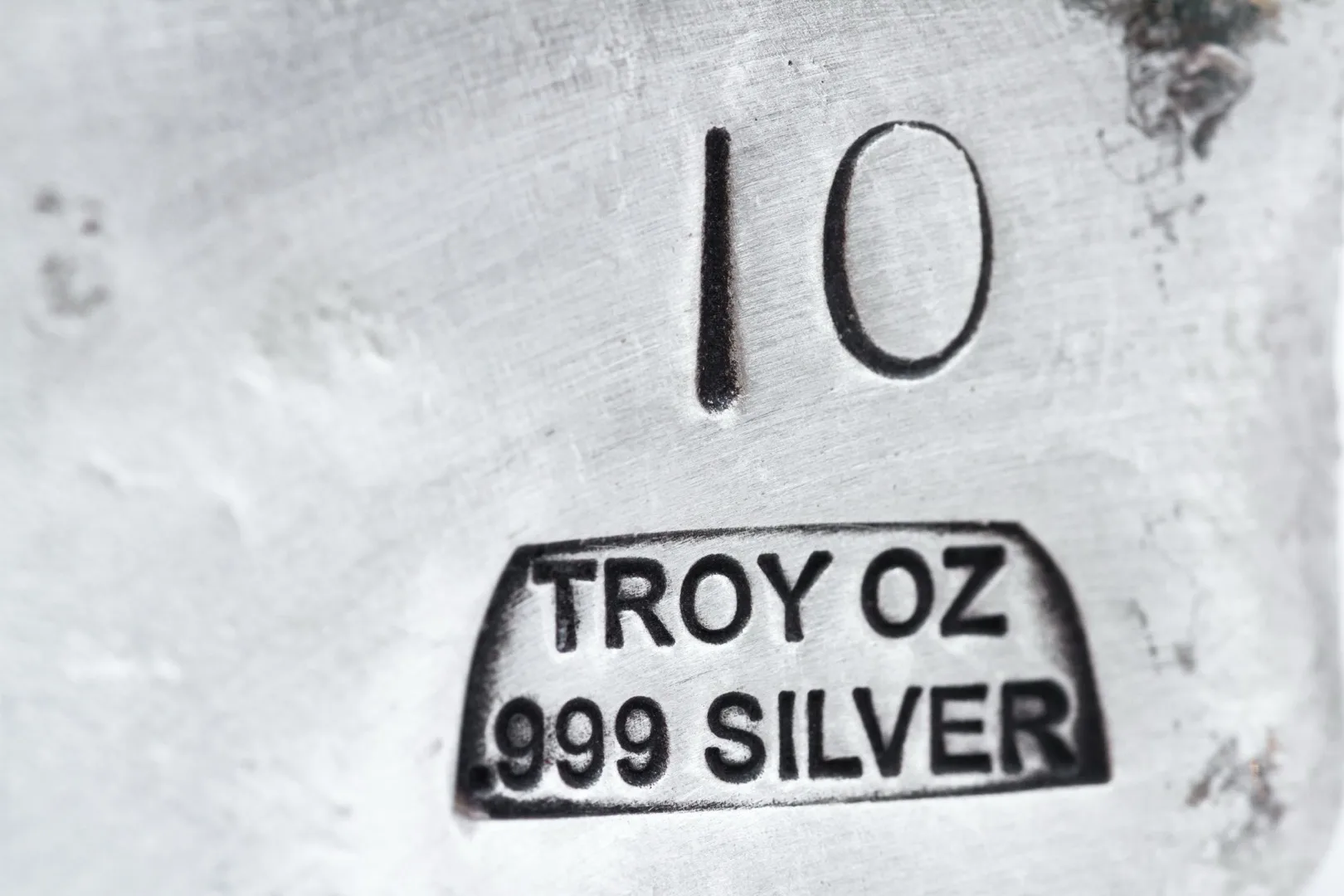
- Sterling: STERLING or 925 on American pieces, or a lion passant with a town mark and date letter on British silver. These are solid silver; see our sterling silver flatware value guide.
- Plate: EP (electroplate), EPNS (electroplated nickel silver), EPBM (Britannia metal), EPC (copper), Silverplate, Quadruple Plate, Triple, A1, AA or XII. Nickel silver, German silver and Alpaca contain no silver at all.
- Brands that are plate unless the word Sterling appears: 1847 Rogers Bros., Wm. Rogers, Community, Holmes & Edwards, Harmony House and Godinger. Gorham, Reed & Barton, Wallace and Towle made both, so read the whole mark.
- "1847" is a brand, not a date. The brand was used for more than a century after the founding year.
Yellow brass or pink copper showing at spoon tips, teapot feet or tray rims means plate. A magnet does not help, because sterling, brass and copper are all non-magnetic. English and American plate often carries pseudo-hallmarks that imitate British ones; our silver hallmarks guide shows how to tell them apart, and our post on telling real silver from plated covers flatware. If the marks are worn, photograph the marks on the back of the handle or under the base for an estimate.
Why melt value is close to zero
The federal purchase specification for silver-plated flatware, A-A-1808B, sets a minimum of 2.1 troy ounces of silver per gross (144) of teaspoons and 3.5 ounces per gross of table forks. At November 2026's silver price of about $52 an ounce, that is roughly 75 cents of silver in a teaspoon and about one ounce in an entire 60-piece service for twelve.
That skin sits on several pounds of base metal and costs more to recover than it is worth, so refiners that take plate buy it by the pound and most coin shops refuse it. "Quadruple plate" on a teapot meant a heavier coating than standard plate, not a meaningful amount of silver. Use the silver melt calculator only for the sterling pieces in the box.
Have one like this? Photograph yours and see what it is worth — free, in about 20 seconds, no account.
Value mine free →Which plated pieces do sell
- Old Sheffield plate: silver fused to copper sheet, made from Thomas Boulsover's discovery in 1743 until electroplating replaced it in the 1840s, as the Victoria and Albert Museum explains. Tureens, wine coasters, entrée dishes and candlesticks with engraved crests sell to collectors and decorators.
- Christofle: the Paris firm's complete flatware services in their case sell best. Pieces carry the CHRISTOFLE name and a small maker's mark: CC with a balance in a square from 1862 to 1935, then OC for Orfèvrerie Christofle.
- Victorian figural pieces: American plate from about 1860 to 1900 by Meriden Britannia, Reed & Barton, Rogers, Smith & Co., Wilcox, Derby and James W. Tufts, such as napkin rings, castor sets, ice-water pitchers and epergnes; see our Victorian antiques value guide.
- Also worth a look: Elkington and other good English electroplate, railroad and steamship silver marked with the line's name, and large, well-made trays, punch bowls and candelabra, which sell as decor.
Old Sheffield plate or later copy?
"Sheffield" is the most misread word in plate. Most pieces stamped Sheffield, Sheffield Reproduction or Made in Sheffield, England are 20th-century electroplate named after the city, not fused plate. Signs of true Old Sheffield plate:
- Copper showing through on high spots with a warm pink tone, and visible seams where sheet was joined.
- A thicker silver panel (a let-in shield) set in so a crest could be engraved without cutting into copper.
- Edges finished with rolled or applied silver wire to hide the copper core.
- Often no marks at all, or a maker's name or small device instead of a full set of hallmarks.
Worn electroplate over copper also shows copper, so judge seams, shield and style together. Replating strips most of the value from Old Sheffield plate. Figural napkin rings are copied too: Leland Little once catalogued a set of twelve as reproductions cast from antique designs and replated. Bright plating with no wear on a 140-year-old piece is a warning.
What silver plate sells for
Typical sold prices at auction and online, not asking prices. Shops and pattern-matching retailers ask far more per piece than they pay.
| Item | Typical value | Notes |
|---|---|---|
| Single plated spoon or fork (1847 Rogers, Community, Wm. Rogers) | $1 to $5 | Serving pieces in popular patterns $5 to $25. |
| Boxed flatware service for 8 or 12 | $40 to $150 | Common 20th-century patterns; the chest adds little. |
| 20th-century tea and coffee set, 3 to 5 pieces | $50 to $250 | A matching tray adds $20 to $100. |
| Trays, candelabra, punch bowls | $20 to $150 | Size, weight and condition decide. |
| Hotel silver flatware with a backstamp | $5 to $40 a piece | Railroad pieces marked with the line's name often bring more. |
| Victorian figural napkin ring | $30 to $200 | Rare figures in original plate at the top. |
| Victorian castor set, ice-water pitcher or epergne | $75 to $400 | Original glass inserts matter. |
| Christofle flatware service | $500 to $2,000+ | By piece count, pattern and case. |
| Old Sheffield plate tureen, coasters or entrée dishes | $300 to $2,500 | Pairs, sets and armorial engraving at the top. |
Wondering about yours?
Find out what your item is worth
Upload a photo and get an instant AI valuation with a realistic price range — free, and no account needed.
Recent sales
- $112.50: three figural napkin rings, including a Meriden Britannia No. 199 boy with his dog and a Wilcox cherub, Jeffrey S. Evans, March 2024, with premium (verified).
- $180: a 19th-century plated tea urn in the form of a locomotive, Cottone Auctions, June 2020, with premium (verified).
- $240: a Racine Co. triple-plate tea and coffee set, 1915, Cottone Auctions, January 2025, with premium (verified).
- $700: Christofle Port Royal flatware, 120 pieces in a two-drawer case, Brunk Auctions, June 2024, before premium (verified).
- £950: a Christofle canteen of 84 pieces for twelve, estimate £200 to £300, Gorringe's, Lewes, February 2023 (verified).
- £637.50: five Sheffield plate wine coasters engraved with a coronet, sold with further plated pieces, Bonhams Edinburgh, April 2021, with premium (verified).
- $800: an unmarked Old Sheffield plate tureen with liner and crested let-in shields, estimate $200 to $400, Brunk Auctions, July 2026, before premium (verified).
- $2,250: a Georgian Old Sheffield plate soup tureen and four sauce tureens with armorials, Bonhams New York, October 2015, with premium (verified).
Ordinary American plate sells for tens of dollars; Christofle and Old Sheffield plate can beat their estimates several times over.
What Estimonia valuations show
From July to early November 2026, people photographed 230 silver-plated pieces on Estimonia. Half were estimated at $30 or less, a quarter at $15 or less, and 37 percent under $25. Three in four came in at $60 or less and one in ten above $140. Fourteen percent reached $100, about 1 percent reached $500, and none reached $1,000.
Most uploads were sideboard pieces: candelabra, trays, teapots, a grape-pattern punch bowl stamped Sheffield, Victorian-style dresser mirrors, boxed flatware such as Harmony House made by Wallace for Sears, and single 1847 Rogers Bros. and Wm. Rogers spoons and forks, plus hotel silver forks from Louisville and 1990s Godinger gift pieces.
These are AI estimates from photos people uploaded, not sale prices, so they show what is typical in real homes rather than auction headlines. For your box, expect tens of dollars, and spend your effort on anything marked sterling or Christofle and on unmarked pieces that look Georgian.
What to do with a box of silver plate
- Sort first. Pull out anything marked STERLING or 925 or with British hallmarks, and price those as silver. Our post on what to do with inherited silverware covers keeping, selling and melting.
- Do not polish hard, strip or replate before valuing. Heavy polishing removes plating, and replating cuts an antique's value; a gentle wash is enough for photos.
- Everyday plate: use it, sell sets locally or as a lot online, or donate. eBay charges 13.6 percent of the total sale up to $7,500 in most categories plus $0.40 per order over $10, per its selling fees page, so a $40 set costs about $6 in fees before shipping.
- Scrap only damaged plate, by the pound, and expect very little.
- Better pieces: Old Sheffield plate, Christofle, Elkington, Victorian figural pieces and railroad silver belong with a regional auction house that holds silver sales. Compare seller commissions and buyer's premiums on our auction house fees page and find specialists in the silver and gold directory.
Trusted resources
- Association of Small Collectors of Antique Silver: illustrated study of Christofle's marks and their dates.
- Dorothy T. Rainwater, Encyclopedia of American Silver Manufacturers: the standard reference for American makers' marks.
What Drives the Value
- Type — Old Sheffield plate, Christofle and Elkington sell far above ordinary 20th-century electroplate.
- Plating condition — worn-through plate with brass or copper showing is hard to sell.
- Completeness — a full service in its chest sells better than odd pieces; matching serving pieces help.
- Maker and model — Meriden Britannia, Reed & Barton, Rogers, Smith & Co. and Tufts figural pieces have a collector base.
- Size and decorative appeal — large trays, candelabra and punch bowls sell mainly as decor.
- Company marks — railroad and steamship names add collector demand; hotel names add a little.
- Replating — replated antique pieces, especially Old Sheffield plate, lose most of their collector value.
- Melt value — close to zero; refiners buy plate by the pound if at all.
Identification Checklist
- Read the back of handles and the underside of bases: STERLING or 925 means solid silver; EP, EPNS, EPBM, EPC, Silverplate, Quadruple Plate, A1, AA or XII means plate.
- 1847 Rogers Bros. is a brand taken from the firm's founding year, not the date of manufacture; most pieces are 20th-century.
- Community, Holmes & Edwards, Wm. Rogers, Harmony House and Godinger are plate brands; Gorham, Reed & Barton, Wallace and Towle made both plate and sterling, so look for the word Sterling.
- Brass, copper or gray base metal showing at spoon tips, teapot feet and tray rims means the piece is plated.
- Nickel silver, German silver and Alpaca are silver-colored alloys that contain no silver.
- Old Sheffield plate (1743 to the 1840s) is often unmarked and shows seams, rolled edges and let-in silver shields for engraving.
- Christofle plate carries the CHRISTOFLE name and a small maker's mark with CC (1862 to 1935) or OC (from 1935).
- Victorian American figural pieces often carry a maker's name and a model number, such as Meriden Britannia No. 199.
How to Spot a Fake
- Sheffield alone on a 20th-century piece usually means electroplate named after the city, not Old Sheffield plate.
- Worn electroplate over copper also shows copper; look for seams, let-in shields and Georgian construction together.
- Bright, unworn plating on a supposedly Victorian figural piece suggests replating or a modern casting.
- Pseudo-hallmarks on English and American plate imitate British marks; real British sterling has a lion passant, town mark and date letter.
- A magnet cannot separate plate from sterling, because brass, copper and silver are all non-magnetic.
- Acid tests only read the thin surface of plated pieces; for anything that might be Old Sheffield plate, ask an auction house silver specialist.