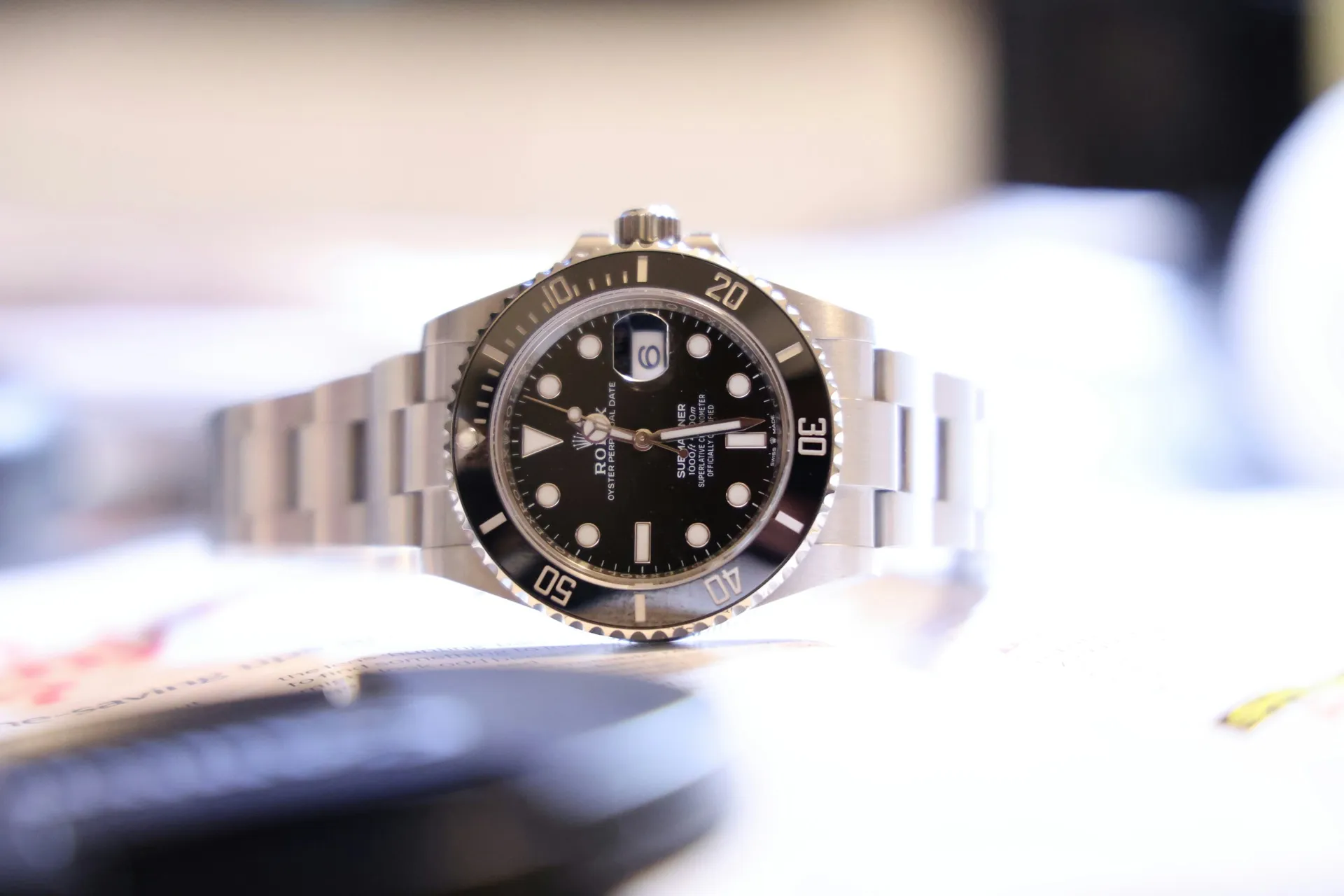
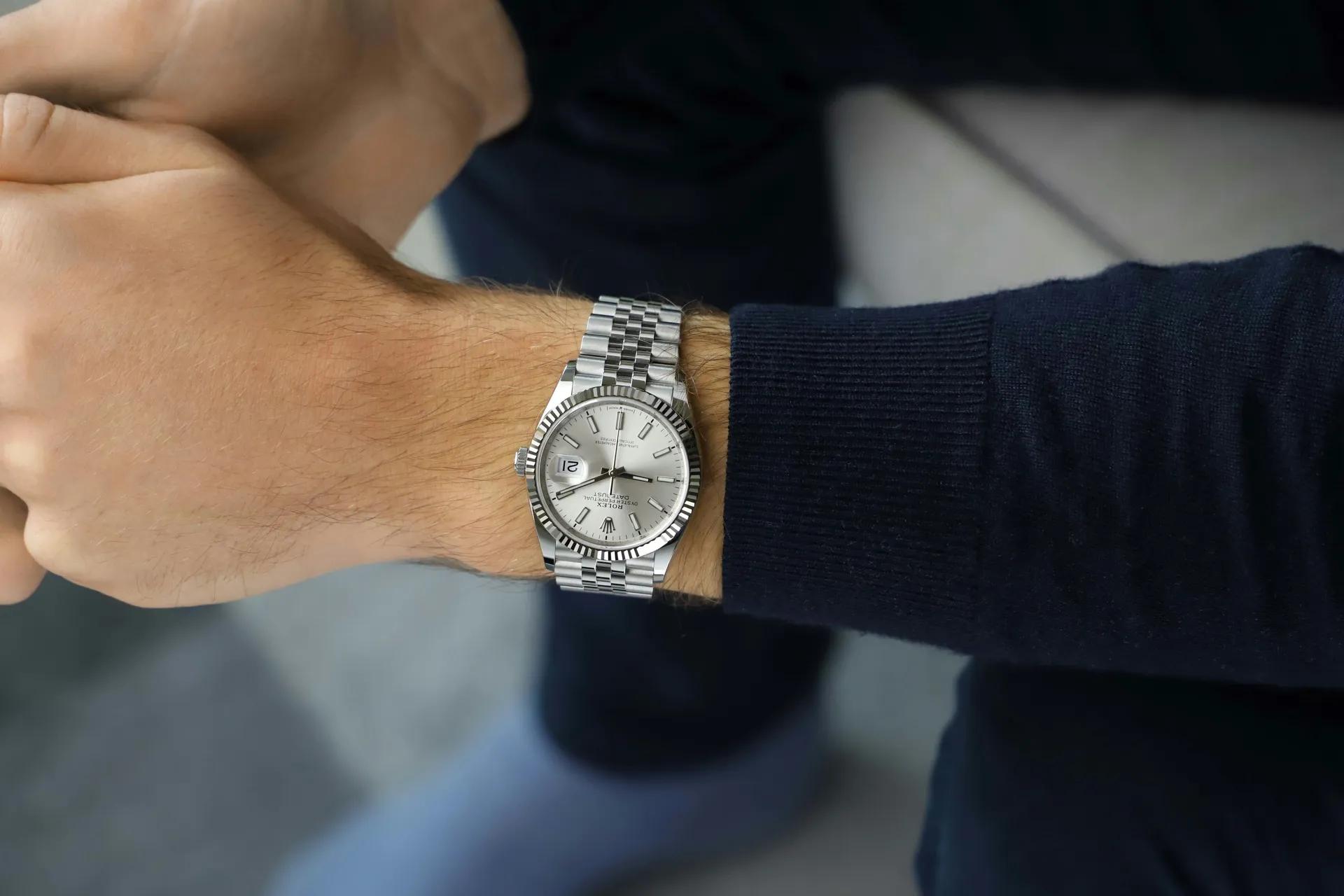
A Rolex is typically worth $2,000 – $22,000, depending on reference, condition, originality, and provenance.
Market values current as of October 2026Most Rolex watches that turn up in a parent's dresser or a safe-deposit box are genuine. Fakes are common, but they are usually bought knowingly and rarely sit in an estate next to the papers and box. The bigger question for most owners is not "fake or real" but "how original is it", because replaced dials, bezels and bracelets change the value far more often than outright counterfeits.
You can do most of the checking yourself with a phone camera and a cheap 10x loupe. The one thing you should not do is open the case.
A genuine Rolex has a solid, smooth caseback on almost every model, a date window magnified about 2.5 times, crisp engraving of the reference and serial numbers between the lugs, and a smooth sweeping seconds hand. A real two-tone Datejust or Submariner that most owners have is typically worth $4,500 to $11,000 at auction. Aftermarket diamond dials or bezels make it worth less, but they do not make it fake.
Where to find the numbers that identify your Rolex
Every Rolex carries two numbers. The reference (model) number is engraved between the lugs at 12 o'clock, and the serial number between the lugs at 6 o'clock. On watches made from the mid-2000s, the serial is also engraved on the rehaut, the inner ring between dial and crystal, and from about 2008 it appears only there, surrounded by "ROLEX ROLEX ROLEX" engraved around the ring. To read the lug numbers you have to remove the bracelet, which a jeweler can do in minutes. The serial gives the production year (see the serial chart linked under trusted resources), and the reference tells you the model and metal: 16233, for example, is a steel and yellow gold Datejust with a fluted bezel.
Is my Rolex real? The checks that matter
- Caseback: Plain, smooth and solid on almost all models. A clear display back is a near-certain sign of a fake. Some vintage ladies' references such as 6917 and 69173 have caseback text, so check before panicking.
- Cyclops lens: The bubble over the date should magnify it about 2.5 times, so the number nearly fills the lens. Fakes often show a small date at 1.5x.
- Crown at 6 o'clock: Since about 2002, Rolex has laser-etched a tiny crown into the crystal at 6. It is almost invisible without a loupe. A big, obvious crown is a warning sign.
- Engraving: Lug and rehaut numbers should be deep and sharp with clean edges. Shallow, dotted or acid-etched numbers point to a fake, and counterfeiters reuse the same serial on many watches.
- Sweep: The seconds hand should glide in small steps. Modern calibers such as the 3135 beat 28,800 times an hour; older 1570-era watches move more slowly but still sweep. A one-second tick means a quartz movement, which only a few Rolex models (Oysterquartz, some Cellini) ever had.
- Dial printing: Under a loupe, the letters should be crisp, evenly spaced and correctly spelled, with hour markers set straight.
- Weight and bracelet: A Rolex feels dense. The clasp should be signed and stamped with a bracelet reference and a date code. A clasp from a different decade than the case usually means a replaced bracelet, not a fake.
- Movement: Only a watchmaker should open the case. A genuine movement is finely finished and signed Rolex. Opening an Oyster case without the right tools can scratch the caseback and break the water seal.
Frankenwatches, service parts and aftermarket diamonds
Many real Rolexes are not all original. A watch that went through several services may have a Rolex service dial, new hands or a replacement bezel. That is normal. The problem is non-Rolex parts. The most common case, and the one we see most often in scans, is a two-tone Datejust with an aftermarket diamond dial or diamond bezel added by a jeweler. The case and movement are genuine, but buyers pay less for it, and Rolex service centers will not work on watches with non-Rolex parts. A "frankenwatch" is a watch assembled from parts of several watches, sometimes with a fake dial or a fake movement in a real case. Those are worth much less.
Bonhams handles this openly. In 2025 it sold a lady's two-tone Datejust described as having "aftermarket diamond accent hour markers" for $5,760 (verified).
What a real Rolex is typically worth
| Item | Typical value | Notes |
|---|---|---|
| Datejust 36 two-tone (16013, 16233) | $4,500 to $8,000 | Bonhams sold a circa-1991 16233 with papers for HK$44,625 (about $5,700) in 2022 (verified). |
| Lady-Datejust two-tone (6917, 69173, 79173) | $2,800 to $5,500 | Factory diamond dials add value; aftermarket diamonds usually add little or nothing. |
| Oyster Perpetual and Air-King (1002, 5500, 14000) | $2,000 to $5,500 | A circa-1968 1002 sold at Bonhams for £1,792 in 2025 (verified). |
| Day-Date in 18k gold (1803, 18038, 18238) | $11,000 to $22,000 | Gold weight sets a floor; rare dials can sell for far more. |
| Submariner (5513, 16610) | $8,000 to $15,000 | Vintage 5513s bring more than the 16610 date model. |
| Real Rolex with aftermarket dial or bezel | 15 to 35 percent less | Keep the original dial if you have it; refitting it restores most of the value. |
| Frankenwatch with non-Rolex movement or fake dial | $500 to $2,500 | Often worth little more than the case and bracelet. |
| Counterfeit | $0 to $100 | Cannot legally be sold as a Rolex. |
Wondering about yours?
Find out what your Rolex is worth
Upload a photo and get an instant AI valuation with a realistic price range — free, and no account needed.
What real Rolexes sell for at auction
- HK$44,625: Datejust ref. 16233, champagne dial, circa 1991, with punched certificate. Bonhams Hong Kong, June 2022 (verified).
- £5,250: Submariner Date ref. 16610, circa 1999, with box. Bonhams London, February 2019 (verified).
- $5,760: Lady's steel and gold Datejust with aftermarket diamond hour markers. Bonhams Los Angeles, September 2025 (verified).
- £1,792: Oyster Perpetual ref. 1002, circa 1968. Bonhams online, London, April 2025 (verified).
- £1,800 hammer: Air-King ref. 5500 from the 1960s, engraved caseback dated 1961. Woolley & Wallis, July 2022 (verified).
Dealer offer or auction: what you will actually be paid
The gap between what a Rolex sells for and what an owner is paid is wide. A jeweler or pawn shop buying outright typically offers 55 to 70 percent of the retail price for a pre-owned piece. A specialist pre-owned dealer usually pays 70 to 85 percent. At auction the buyer pays a premium of about 25 to 28 percent on top of the hammer, and the seller pays a commission of roughly 10 to 15 percent, so you net about 85 to 90 percent of the hammer price. See our auction house fees guide for the detail.
What to do now
- Do not polish the case or open the back. Polishing softens the lug edges and lowers the value of vintage pieces.
- Gather the box, punched papers or warranty card, service receipts and any original parts. Papers often add 10 to 20 percent.
- Photograph the dial, caseback and the numbers between the lugs for a quick AI estimate, then see our watch valuation page.
- Have a watchmaker confirm the movement before you sell. The AWCI, linked below, lists certified watchmakers.
- Get two quotes, one from a dealer and one from an auction house in our watch dealers and auction houses directory.
For model-specific values, see our Rolex Datejust value guide and Rolex Submariner value guide.
Trusted resources
- Bob's Watches: how to spot a fake Rolex: detailed checklist with photos.
- Bob's Watches: Rolex serial numbers: production year chart.
- American Watchmakers-Clockmakers Institute: find a certified watchmaker.
What Drives the Value
- Originality — an all-original dial, hands and bezel are worth 15 to 35 percent more than a watch with aftermarket diamond parts.
- Model and metal — 18k gold Day-Dates and Submariners bring more than steel Oyster Perpetuals and Air-Kings.
- Box and papers — the original punched certificate or warranty card typically adds 10 to 20 percent.
- Case condition — sharp, unpolished lugs and a crisp caseback add value; heavy polishing lowers it.
- Service history — a recent Rolex service is a plus, though replacement dials should be kept.
- Dial — rare or factory diamond dials can add thousands; faded or refinished dials subtract.
- Where you sell — a jeweler typically pays 55 to 70 percent of retail, a specialist dealer or auction more.
Identification Checklist
- The reference number is engraved between the lugs at 12 o'clock and the serial number between the lugs at 6 o'clock; remove the bracelet to read them.
- From the mid-2000s the serial also appears on the rehaut at 6 o'clock, and from about 2008 only there, with ROLEX engraved repeatedly around the ring.
- The last digit of the reference gives the metal: 0 is steel, 3 is steel and yellow gold, 4 is steel and white gold, 8 is 18k yellow gold.
- Datejust 16013 and 16233 are two-tone with a fluted gold bezel; Lady-Datejust 69173 is the 26 mm two-tone version.
- Day-Date references 1803, 18038 and 18238 are only made in gold or platinum, never steel.
- Clasps are signed Rolex and stamped with a bracelet reference and a two-character date code that should roughly match the case age.
- Original punched papers or a warranty card list the same serial as the case and are the strongest proof of identity.
How to Spot a Fake
- A transparent display caseback is a near-certain sign of a fake on any standard Rolex model.
- The cyclops should magnify the date about 2.5 times; many fakes magnify only about 1.5 times.
- Since about 2002, a tiny crown is laser-etched into the crystal at 6 o'clock and is barely visible without a loupe.
- Fake lug engravings are often shallow, dotted or acid-etched, and the same serial is reused across many fakes.
- A seconds hand that ticks once per second indicates quartz; only Oysterquartz and some Cellini Rolex models used quartz.
- Aftermarket diamond dials and bezels on real watches often have uneven stone setting and missing or reprinted dial text.
- Have a watchmaker open the case and confirm a signed Rolex caliber, such as the 3135 or 1570, before selling.
Thinking of Selling?
The route often matters as much as the item. A dealer typically pays 45–70% of an item's value, so they can resell it at a profit; an auction house typically returns 75–88% after its commission, but takes weeks.
-
See where yours sits
Photograph it and get a value range in about 20 seconds — free, no account needed.
-
Meet the right specialists
If it's worth $1,000 or more, we can introduce you to auction houses that handle pieces like it. Free for you, and you decide whether to go ahead.
-
Or get a step-by-step plan
A Sell-it Plan ($9.99) compares auction, dealer and online sale for your item, shows what you would keep after fees, names auction houses that take pieces like it, and drafts your enquiry email.