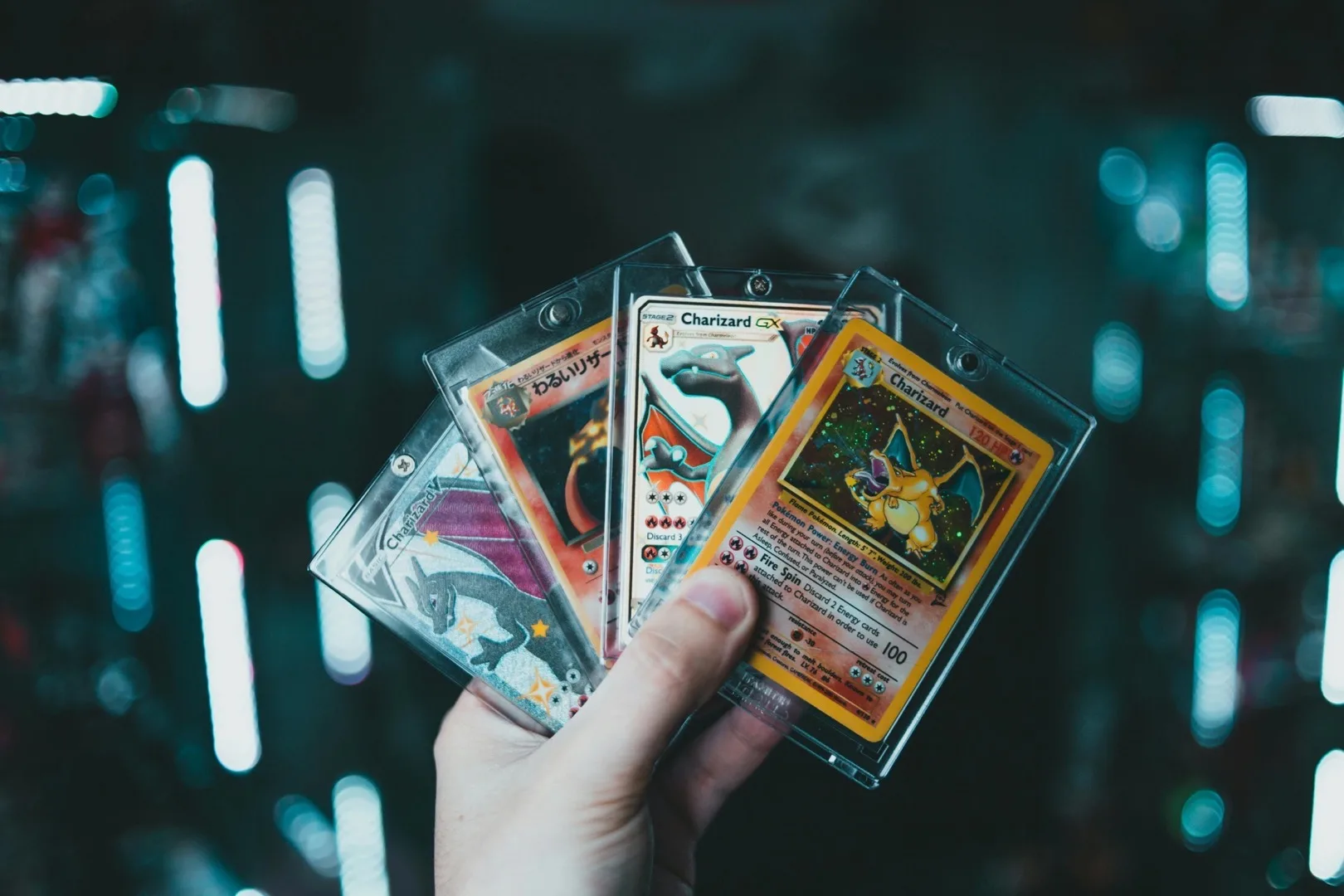
A Pokémon card is typically worth $150 – $5,000, depending on reference, condition, originality, and provenance.
Market values current as of October 2026Thinking of grading it? Work out whether it pays →
You found a stack of Pokémon cards in a closet. Some look almost new. You have heard that graded cards sell for big money. So should you send them in?
The honest answer is that grading is a bet. You pay the fee up front, no matter what grade comes back. The card only gains value if it gets a high grade. For a card that sells for $10 or $20 as it is, the fee alone wipes out any gain. This guide shows you how to tell which cards are worth the bet.
What grading actually does
A grading company checks that the card is real, gives it a grade from 1 to 10, and seals it in a hard plastic case called a slab. Buyers trust the grade, so they pay more for a high-grade slab than for the same card loose.
The key words are "high grade." A PSA 10 can sell for many times the raw card. A PSA 9 often sells for much less than a 10. A PSA 7 or lower often sells for about the same as the raw card, sometimes less. The premium lives almost entirely at the top of the scale.
What grading costs in 2026
Fees changed a lot this year. PSA paused its cheaper Value tiers in June 2026. In September it opened a new Standard tier and renamed others. Beckett (BGS) paused its Base and Standard card submissions in September. These are the prices on the graders' own websites as of October 1, 2026.
| Company and service | Price per card | Max card value | Estimated turnaround |
|---|---|---|---|
| PSA Standard | $59.99 | $1,000 | 90–100 business days |
| PSA Priority | $79.99 | $1,500 | 70–80 business days |
| PSA Express | $199 | $2,500 | 20–30 business days |
| PSA Super Express | $349 | $5,000 | 10–15 business days |
| CGC Bulk (25-card minimum) | $17 | $500 | 150 working days |
| CGC Economy | $20 | $1,000 | 90 working days |
| CGC Standard | $55 | $3,000 | 10 working days |
Wondering about yours?
Find out what your Pokémon card is worth
Upload a photo and get an instant AI valuation with a realistic price range — free, and no account needed.
Sources: PSA's trading card grading price page and return postage chart, and CGC Cards' services and fees page, all checked October 1, 2026. Fees change often, so check again before you submit.
The "max card value" matters. You must pick a service level that covers what the card will be worth after grading. If your card comes back worth more than the limit, the grader can bill you for the higher tier. A card that might be a $3,000 PSA 10 cannot go through the $59.99 tier.
The real cost per card
The grading fee is not the whole bill. You also pay shipping both ways.
- Return shipping: PSA charges $19.99 to send back 1 to 4 cards insured up to $2,000. The price rises with the number of cards and the total value.
- Sending the cards in: you pay your own postage, with tracking. PSA does not insure your package on the way in, so you may want to buy insurance yourself.
- Supplies: penny sleeves, semi-rigid card holders and a sturdy box. These cost little, but they add up.
- Membership: CGC gives paying members 10% to 20% off grading. A paid membership only makes sense if you grade often.
For a single card sent to PSA Standard, a realistic total is about $90 to $100 once you add both legs of shipping. Sending four cards in one box spreads the shipping, but the $59.99 fee still applies to each card.
Which cards are worth grading
Grading tends to pay off in three cases:
- Vintage holos in great condition. Holo cards from the 1999–2000 Base, Jungle and Fossil sets are popular in slabs. A clean Charizard, Blastoise or Venusaur can be worth grading even at a 7 or 8.
- Key 1st Edition and Shadowless cards. These early print runs carry a big premium, and buyers want proof they are real. Not sure which you have? See our guide to 1st Edition vs Shadowless vs Unlimited.
- Modern chase cards likely to get a 10. Popular alternate-art and special illustration cards, pulled from the pack and sleeved right away. Here the gap between a 10 and a 9 is often large, so condition is everything.
Grading rarely pays for common and uncommon cards, non-holo cards, cards with visible wear, bulk modern holos, and anything that sells for under about $50 raw. Not sure what your old cards are worth to begin with? Start with are old Pokémon cards worth anything? and our vintage Pokémon card value guide.
Gem rates: how often cards get a 10
A "gem rate" is the share of graded copies of a card that got a 10. You can see it for free in the PSA Population Report. Look up your card and compare the count of 10s with the total graded.
Two things to keep in mind. First, gem rates for vintage cards are low. Cards from 1999 were printed with centering problems and spent decades in binders and shoeboxes. Most come back below a 10. Modern cards gem far more often, which is also why a modern PSA 10 premium can be smaller than you expect.
Second, the population report only counts cards people chose to send in. Collectors send their best copies. A card from a childhood binder will usually do worse than the average in the report.
What kills a grade
Graders look at four things. Any one of them can cap your grade.
- Centering. The border should be even on the left and right, and top and bottom. A card visibly off-center will not get a 10, no matter how sharp it is.
- Corners. All four should be sharp points. A soft or rounded corner usually drops a card to an 8 or lower.
- Edges. Look at the back. White specks or lines along the blue border, called whitening, are the most common flaw on old Pokémon cards.
- Surface. Tilt the card under a lamp. Scratches on the holo, print lines, dents, fingerprints and creases all cost points. A crease of any size usually means a low grade.
A worked example
The numbers below are an example only, not prices for a specific card. They show how the math works. Assume a card sells for $40 raw. In a PSA slab it sells for $300 at a 10, $90 at a 9 and $55 at an 8. You send it alone to PSA Standard with about $35 in shipping both ways, for a total cost of about $95.
| Card condition | Chance of a 10 / 9 / 8 / 7 or lower | Expected value in a slab | Gain vs selling raw |
|---|---|---|---|
| Pack fresh, sleeved right away | 35% / 45% / 15% / 5% | about $155 | about +$20 |
| Clean, but not perfect up close | 12% / 43% / 30% / 15% | about $97 | about −$38 |
| Light play, some whitening | 2% / 13% / 35% / 50% | about $55 | about −$80 |
The expected value multiplies each grade's price by its chance and adds them up, counting a 7 or lower at 90% of the raw price. The gain subtracts the $95 cost and the $40 you would get by selling raw. Even the best-case card only gains about $20, for three to four months of waiting. That is borderline. The others lose money. The grading calculator does this math for your own card and fees.
PSA, CGC, BGS or TAG?
PSA is the largest grader, and PSA slabs usually sell for the most at the same grade. That premium is why most people who grade to sell choose PSA, even though it costs more.
CGC charges less per card. Economy is $20 for cards up to $1,000 as of October 1, 2026. But CGC slabs usually sell for less than PSA slabs at the same grade. The lower fee can still win for cards where the PSA premium is small.
BGS (Beckett) is known for subgrades on centering, corners, edges and surface. As of October 1, 2026, its Base and Standard submissions are paused, and its website does not list a price for the open Express service.
TAG is a newer grader that uses scanning technology and gives a detailed condition report. Its slabs have a smaller resale track record. We did not verify its current fees, so check its website directly.
Before choosing, look up sold prices for your exact card in each company's slab. The difference in sale price often matters more than the difference in fees.
How to submit
Directly. Create an account on the grader's website, fill in the online form, choose a service level and pay. Pack the cards in sleeves and semi-rigid holders, box them well and ship with tracking. This is the simplest route for a handful of cards.
Through a dealer or group submission. Some card shops and online groups combine many collectors' cards into one order. That can reach bulk pricing and splits shipping. In exchange, you pay the organizer a fee and trust them with your cards. Ask how they handle insurance, and only use someone with a long, public track record.
Whichever route you choose, write down each card and photograph the front and back before it leaves your hands.
When to sell raw
Sell the card as it is when the fee and shipping are more than the likely gain, when the card has visible wear, when you need the money soon, or when you are not sure what the card is. Raw cards sell fine on eBay and to local card shops, as long as you post clear photos of the front, back and corners.
If you do not know which card or set you have, photograph the front and back and we will identify it and estimate its raw value. Then plug the numbers into the card grading calculator and let the math decide.
How to Value a Pokémon card: Step by Step
-
Identify the card
Find the exact set, number and edition. Photograph the front and back and use a free scan if you are unsure.
-
Look up sold prices
Search eBay sold listings or PriceCharting for the raw card and for PSA 10, 9 and 8 copies.
-
Pre-grade it at home
Check centering, corners, edges and surface under good light, and be honest about flaws.
-
Run the numbers
Enter the values and your condition guess in the card grading calculator to compare grading with selling raw.
-
Submit or sell raw
If grading pays, sleeve the card, put it in a semi-rigid holder and submit directly or through a trusted dealer. If not, sell it raw with clear photos.
What Drives the Value
- Grade — almost all of the slab premium sits at a 10, and sometimes a 9.
- Grading company — PSA slabs usually sell for more than CGC or BGS at the same grade.
- Edition and print run — 1st Edition and Shadowless cards carry a large premium over Unlimited.
- Card and character — holo starters and Charizard drive demand; commons rarely do.
- Gem rate — the fewer 10s in the population report, the more a 10 is worth.
- Raw value — if the raw card sells for under about $50, the fee usually outweighs the gain.
- Total cost — fee, shipping both ways and any upcharge if the card grades higher than its tier.
Identification Checklist
- Wash and dry your hands, then handle the card only by its edges.
- Check centering front and back: the borders should look even left to right and top to bottom.
- Look at all four corners with a magnifying glass or your phone camera zoomed in. Any rounding or fraying rules out a 10.
- Turn the card over and look for white specks along the blue border. Edge whitening is the most common flaw on old Pokémon cards.
- Tilt the card under a bright lamp to spot scratches, print lines, dents and fingerprints on the surface and holo.
- Hold the card flat at eye level to look for bends, waves or creases.
- Be strict: if you are unsure between two grades, assume the lower one.
How to Spot a Fake
- Grading includes authentication: fakes come back ungraded, and you usually still pay the fee and return shipping.
- Compare the font, colors and holo pattern with a known real copy before you submit.
- Shine a phone light through the card: many fakes let more light through than real cards.
- When buying a slab, look up the certification number on the grader's website and check the photos match.
- Be wary of slabs from unknown graders, which do not carry the trust or resale value of PSA, CGC or BGS.