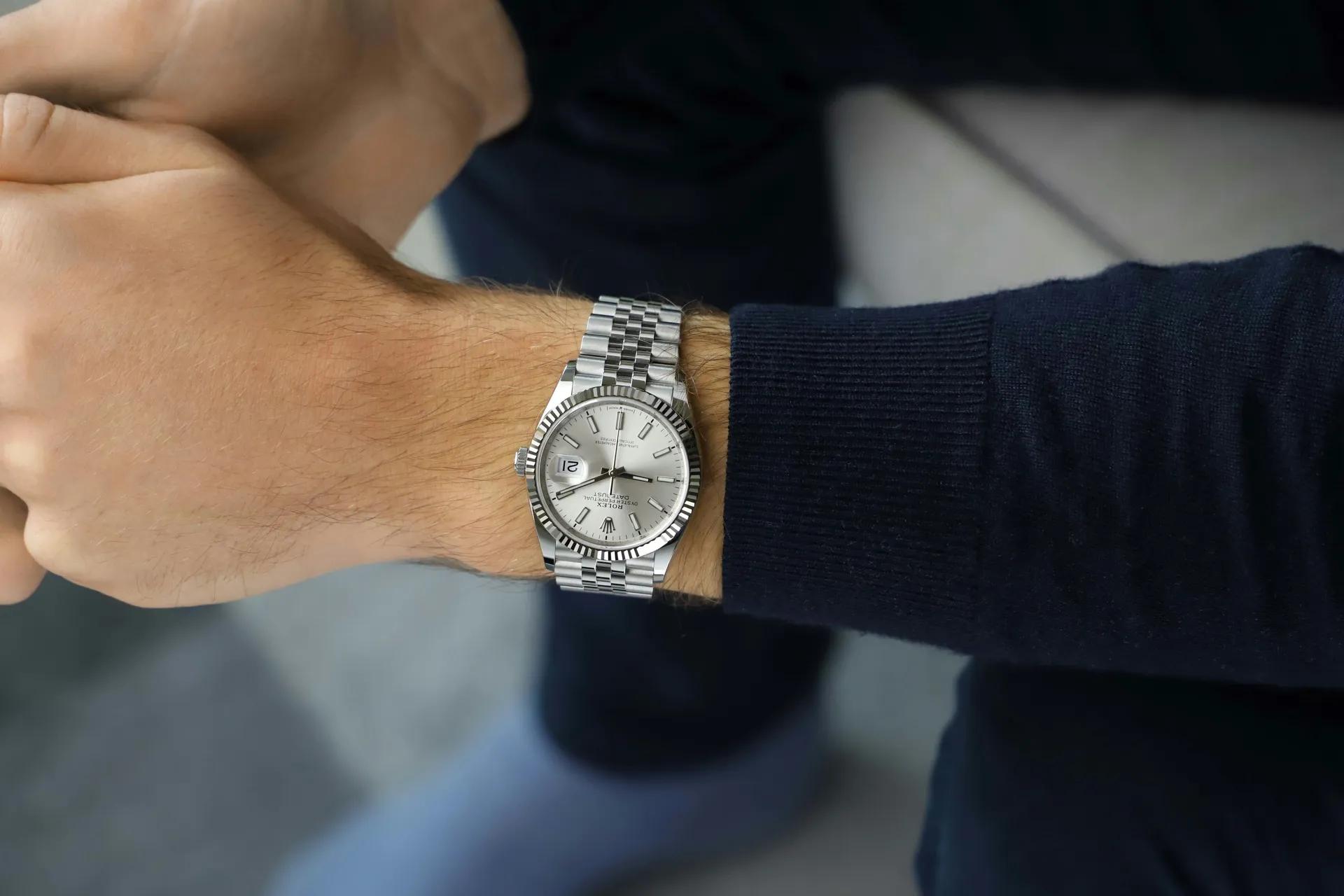
This item is typically worth $20 – $1,500, depending on reference, condition, originality, and provenance.
Market values current as of October 2026Most inherited "gold" watches from Hamilton, Elgin, Bulova, Gruen, Benrus or Waltham are gold-filled or gold-plated, not solid gold. They typically sell for $20 to $150. A solid 14k or 18k gold watch is different: its case alone is worth its gold weight, which in 2026 is often several hundred dollars or more, and collectible models are worth well above that.
So the first job is not to look up the brand. It is to find out what the case is made of.
Gold-filled and gold-plated watches usually sell for $20 to $150, with sought-after models up to about $500. Solid 14k or 18k gold dress watches are typically worth their melt value plus a modest premium, often $400 to $1,500. Gold chronographs and collectible models from Universal Genève, Longines, Omega or Hamilton can bring $2,000 to $20,000 or more. Look inside the caseback for the metal mark first.
Solid gold, gold-filled or plated? Read the caseback
The marks are usually stamped inside the caseback, so a watchmaker may need to open it. Do not pry it yourself.
- Solid gold: "14K", "18K", "0.585" or "585" (14k), "0.750" or "750" (18k), "9ct" or "375" in Britain, and often a hallmark such as a Swiss control mark. American solid cases may also say "14K Solid Gold".
- Gold-filled or rolled gold: "10K Gold Filled", "1/20 12K G.F.", "Rolled Gold Plate", "R.G.P." or "Doublé". A layer of gold is bonded to brass. US rules require gold-filled marks to state the karat (FTC Guides, 16 CFR Part 23).
- Gold-plated: "Gold Plated", "Gold Electroplate", "Plaqué Or", "20 Microns" or "Base Metal". A thin layer over brass or steel.
- Steel back: "Stainless Steel Back" on a gold-colored watch almost always means a plated or gold-filled bezel.
"14K" on its own means solid gold. "14K" next to "Gold Filled" or "G.F." does not. Worn corners that show yellow-pink brass are another giveaway. For more tests, see our guide on how to identify real gold.
The melt value floor
A solid gold case has a minimum value set by its gold content. Gold reached a record of about $5,600 an ounce in January 2026 and was near $4,200 in June, according to Reuters via Kitco. At $4,200, 14k gold is worth about $79 per gram and 18k about $101 per gram. A typical 1950s men's 14k case contains roughly 8 to 15 grams of gold, about $630 to $1,200 in metal. A gold buyer will pay 70 to 90 percent of that. Estimate yours with our gold melt calculator, weighing the case without the movement, crystal or strap.
Gold-filled cases contain only about one-twentieth gold by weight, so their scrap value is a few dollars.
When a gold watch is worth more than scrap
- Chronographs: gold Universal Genève Compax and Tri-Compax, Longines and Omega chronographs, and Heuer and Movado chronographs bring thousands.
- Collectible references: the Universal Genève Polerouter, Longines Lindbergh Hour Angle and Weems navigator watches, and early Omega Constellations.
- Hamilton Electric: the 1957 Ventura and other early electric models have a strong American following.
- Gold Rolex, Patek Philippe and Vacheron Constantin: almost always worth far more than their gold, with their own markets.
- Original condition: an unpolished case, original dial, box and papers add a premium. A refinished dial removes most of it.
The scrap trade works the other way too. In 2026 a UK gold buyer melted an 18k late-1970s Omega Constellation because its gold was worth £5,750, about 35 percent more than its £4,000 to £4,500 auction estimate (verified, Reuters via Kitco). Get a collector valuation before you sell any gold watch to a refiner.
Gold pocket watches follow different rules and are covered in our antique pocket watch value guide.
What old gold watches sell for
Ranges are typical auction results. Shops and pawnbrokers usually offer melt value or less, and dealers retail the same watches for more.
| Item | Typical value | Notes |
|---|---|---|
| Gold-plated watch (Bulova, Benrus, Timex, etc.) | $10 to $75 | Worn plating lowers value further. |
| Gold-filled wristwatch (Hamilton, Elgin, Gruen, Waltham) | $20 to $150 | Art Deco shapes and running watches bring the top; rare models up to about $500. |
| Solid 14k or 18k dress watch, common maker | Melt value plus 10 to 50 percent, often $400 to $1,500 | Value rises and falls with gold prices. |
| Gold Longines, Omega or Universal Genève time-only | $800 to $3,000 | Original dials and named models bring more. |
| Hamilton Electric Ventura, 14k | $2,500 to $6,000 | Box and papers add value; must not have a replaced movement. |
| Gold chronograph (Universal Genève, Longines, Omega) | $3,000 to $25,000 | Tri-Compax and rare dials lead. |
Wondering about yours?
Find out what your item is worth
Upload a photo and get an instant AI valuation with a realistic price range — free, and no account needed.
Verified auction results
- CA$625: Hamilton wristwatch, 14k yellow gold case and buckle, 1940s, against a CA$180 to 240 estimate. Waddington's, Toronto, June 2025 (verified).
- £478: Longines 18ct gold automatic, 1950s. Bonhams London, November 2004 (verified). The same gold would be worth far more today.
- £3,125: Universal Genève Compax chronograph, 18k rose gold, circa 1950. Bonhams London, February 2019 (verified).
- $3,776: Hamilton Ventura Electric, 14k yellow gold, circa 1960, against a $1,500 to 2,500 estimate. Antiquorum New York, March 2007 (verified).
- HK$156,250 (about $20,000): Universal Genève Tri-Compax, ref. 181102, 18k gold, circa 1970. Phillips Hong Kong, 2019 (verified).
- £5,750 in gold: 18k Omega Constellation, late 1970s, melted by a UK gold buyer in 2026 (verified).
What to do now
- Do not polish it or sell it by weight first. A watchmaker can open the caseback and confirm the metal for a small fee.
- Get a first estimate. Photograph the dial, the caseback and the marks inside it for an AI value estimate, or see our watch valuation page.
- Pick the right route. Gold-filled watches sell best on eBay or in group lots at local auctions. Solid gold dress watches: compare a gold buyer's quote with a regional auction, where sellers typically pay 10 to 20 percent commission and buyers pay a premium of 20 to 28 percent. Gold chronographs and collectible models belong in a specialist watch sale at Bonhams, Phillips, Christie's or Antiquorum.
- Keep the paperwork. Boxes, receipts and engraved presentation backs add interest and help with provenance.
Trusted resources
- National Association of Watch and Clock Collectors: maker histories and serial records.
- FTC Guides for the Jewelry Industry (16 CFR Part 23, linked above): legal meaning of gold-filled and gold-plated.
- Bonhams, Phillips and Antiquorum archives (linked above): searchable past results by maker.
What Drives the Value
- Case metal — solid gold sets a melt-value floor of hundreds of dollars; gold-filled and plated cases have almost no metal value.
- Karat and weight — 18k is worth about 28 percent more per gram than 14k, and heavier cases are worth more.
- Gold price — solid gold watches rise and fall with gold, which traded between about $4,200 and $5,600 an ounce in 2026.
- Complication — chronographs, calendars and moon phases sell far above simple time-only watches.
- Maker and model — Universal Genève, Longines, Omega and Hamilton Electric models have strong collector demand.
- Originality — an original, unrestored dial and unpolished case add a premium; refinished dials remove most of it.
- Running condition — a non-running gold-filled watch is worth little; a service can cost more than the watch.
- Box, papers and provenance — original packaging or a documented presentation engraving adds interest.
Identification Checklist
- Have a watchmaker open the caseback; metal marks are usually stamped on the inside.
- "14K", "18K", "0.585", "0.750", "585" or "750" on its own means a solid gold case; "9ct" or "375" is British 9-karat gold.
- "10K Gold Filled", "1/20 12K G.F.", "Rolled Gold Plate", "R.G.P." or "Doublé" means a bonded gold layer over brass, not solid gold.
- "Gold Plated", "Gold Electroplate", "Plaqué Or", "20 Microns" or "Base Metal" means a thin plated layer.
- "Stainless Steel Back" on a gold-colored watch means only the front is gold-filled or plated.
- Brass showing through on the lugs, corners or caseback edge means the case is gold-filled or plated.
- Note the maker, model name and any reference or case number; Hamilton, Elgin and Longines serials can be dated.
- Weigh the bare case on a gram scale to estimate gold content if it is solid.
How to Spot a Fake
- A plain "14K" stamp can be faked on plated jewelry-store watches; a jeweler's acid or XRF test confirms the metal.
- Real gold is not magnetic; a case that sticks to a magnet is plated or filled over base metal.
- Check that the movement matches the dial name; old cases were often re-cased with unrelated movements.
- Refinished or redialed watches often show crisp new printing on an aged case; collectors pay much less for them.
- Watch for "gold" Rolex, Omega and Longines fakes with plated cases; caseback marks, serials and movement signatures should all match.
- Before scrapping any gold watch, get a collector valuation; some ordinary-looking models are worth more than their gold.
Thinking of Selling?
The route often matters as much as the item. A dealer typically pays 45–70% of an item's value, so they can resell it at a profit; an auction house typically returns 75–88% after its commission, but takes weeks.
-
See where yours sits
Photograph it and get a value range in about 20 seconds — free, no account needed.
-
Meet the right specialists
If it's worth $1,000 or more, we can introduce you to auction houses that handle pieces like it. Free for you, and you decide whether to go ahead.
-
Or get a step-by-step plan
A Sell-it Plan ($9.99) compares auction, dealer and online sale for your item, shows what you would keep after fees, names auction houses that take pieces like it, and drafts your enquiry email.